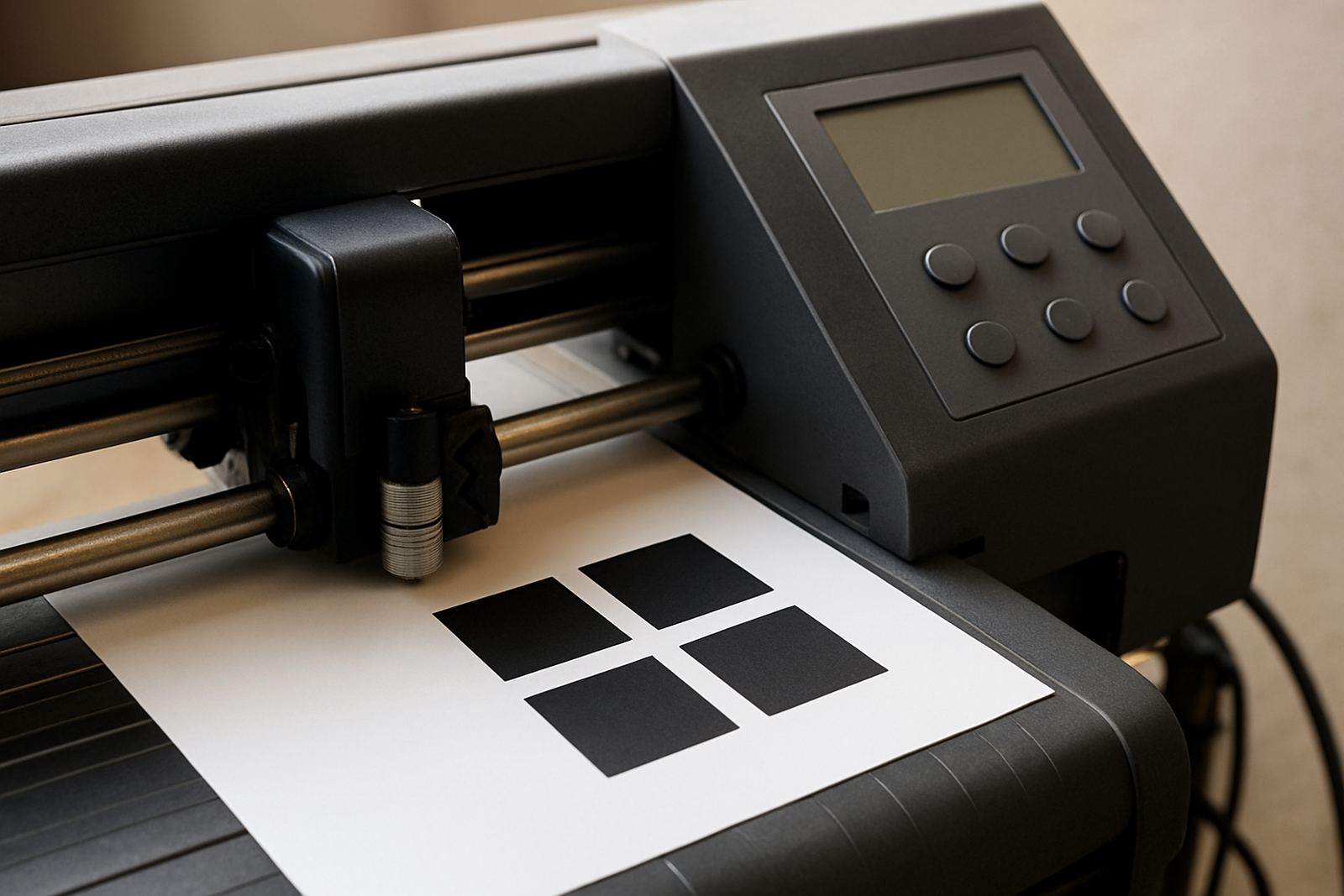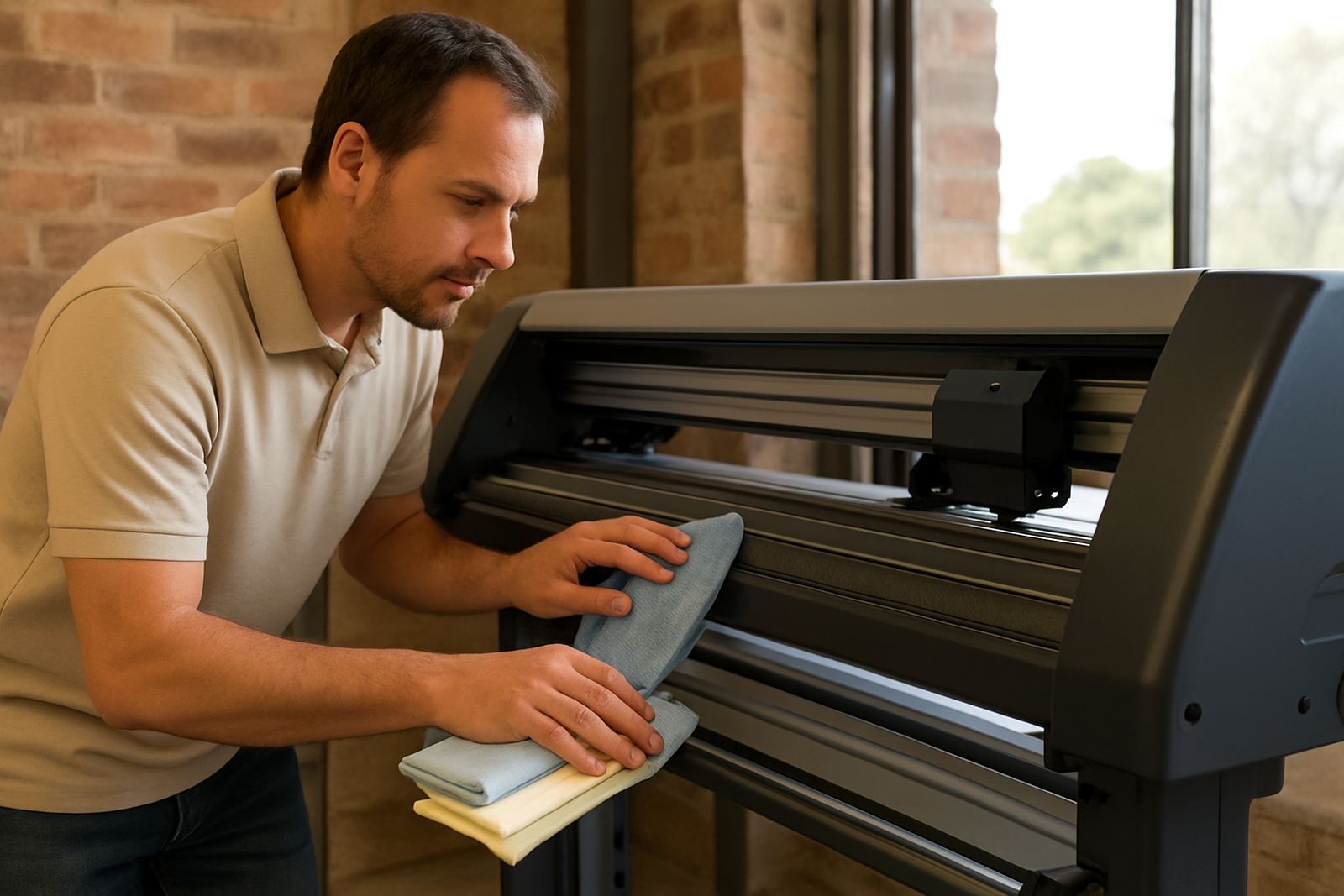
What the Maintenance Basics session covers
This service is built for operators and supervisors who want to keep cutters in good working order without waiting for faults to build up. We show your team how to clean the machine properly, check wear points and spot the early signs of blade, carriage or media feed problems before they affect production.
The session covers practical care for the cutting head, rails, pinch rollers, sensors, drive areas and surrounding work space. We also go through the right way to handle dust, adhesive build-up and humidity related issues, which matter a lot in Gauteng and coastal areas where media can swell or curl. A clean machine cuts more accurately and usually needs fewer emergency callouts, which helps keep jobs moving when power returns after load-shedding.
- Daily cleaning routines for cutters and work areas
- Safe handling of blades, holders and media waste
- Visual checks for roller wear, dust and misalignment
- Basic care to reduce drift, drag and poor registration
Who should book this training
Maintenance Basics suits print shops, sign makers, in-house studios, packaging teams and creative departments that run cutters daily or several times a week. It is especially useful where one person is doing production, finishing and machine care, because small habits make a big difference to uptime.
Teams in Isando, Sandton, Midrand, Germiston, Boksburg and Randburg often book this when they take on new staff or when a machine starts giving inconsistent results. It is also a practical choice for businesses that work late shifts, have staff rotation, or share equipment across different operators. If you already run clean and tidy production lines, the training still helps standardise what each person does. That cuts down on operator error and helps the machine stay set up the same way from job to job.
- New operators who need good habits from day one
- Experienced staff needing a refresher on care routines
- Supervisors who want clearer maintenance checks
- Teams running high-volume sticker and signage work
What is included in the session
We keep the session hands-on and practical. The trainer works through your actual cutter and the media you normally use, so the advice fits your shop floor rather than a generic checklist. Depending on your setup, we can cover standard print-and-cut plotters, standalone cutters and machines used for contour work on vinyl, laminated prints and labels.
Included items usually cover cleaning methods, inspection points, basic lubrication where approved, blade area checks, media path cleaning and a simple log sheet for routine upkeep. We also explain what not to do, because some common cleaning products and rough cloths can damage sensors, covers or moving parts. The aim is to help your staff preserve accuracy and avoid avoidable repair costs.
- Cleaner rollers, rails and cutting areas
- Blade holder and blade care guidance
- Media path checks for dust and adhesive residue
- Recommended daily, weekly and monthly tasks
- Simple fault spotting before downtime grows
How we run the maintenance training
The process starts with a quick check of your machine, media types and current care routine. From there we show your team the correct order for cleaning and inspection, then let them practise the steps while we guide them. If needed, we adjust the routine to suit your workload, floor space and shift pattern.
After the hands-on part, we explain how often each task should be done and who should sign it off. Some shops need a daily wipe-down and weekly roller inspection, while others only need deeper cleaning once or twice a month. We also cover safe shutdown steps for power interruptions, especially useful during load-shedding where a machine may stop mid-job and need a careful restart. The session ends with troubleshooting basics so your staff can tell the difference between a simple maintenance issue and a fault that needs technical support.
- Initial machine and workflow check
- Demonstration of cleaning and inspection steps
- Operator practice on the actual equipment
- Maintenance interval guidance and sign-off setup
- Basic troubleshooting and next-step advice
Turnaround, booking and support areas
Turnaround depends on the number of staff attending and whether the session is done on site or remotely. Most maintenance training bookings are arranged within a practical working window, with shorter refresher sessions available for teams that only need a tune-up on routine care. For nationwide cutter installs and support visits, we coordinate around your production hours so you are not left idle longer than needed.
From Isando we support Johannesburg, Sandton, Midrand, Germiston, Boksburg and Randburg, with cutter installs and training available nationwide. If your team is in a busy industrial area or working under municipal time limits for deliveries and collections, we can plan the visit accordingly. Where possible, we also align maintenance training with a machine install or operator induction, which saves time and keeps the information consistent.
Pricing approach and maintenance intervals
Pricing is based on the machine type, number of staff, session length and whether travel is needed outside the main Johannesburg area. We quote for the actual work required rather than pushing a fixed package that may not suit your setup. If you only need a short refresher on cleaning and care, the cost is kept lower than a full production coaching session.
As a rule, cutters used every day should get a quick clean at the end of each shift, a more detailed check every week and a deeper maintenance review once a month. In humid areas or dusty production spaces, those intervals may need to be tighter. Teams that cut laminated prints, reflective media or thicker vinyl often need closer blade and roller checks because wear builds faster. If a machine runs in bursts rather than constantly, the routine can be lighter, but it still needs a written schedule so nothing gets missed.
- Daily: dust removal, blade area wipe-down and waste clear-up
- Weekly: roller inspection, media path cleaning and feed check
- Monthly: deeper clean, wear review and maintenance log update
- Quarterly: supervisor review for repeat faults and operator habits
Why regular care keeps cutters performing better
Most cutter problems start small. A bit of dust, a loose setting or a worn roller can slowly turn into bad tracking, crooked cuts or wasted material. Regular maintenance training helps your team catch those issues earlier, before they start affecting deadlines and reprints. It also supports cleaner output, which matters when you are producing work for signage, labels, promotional items or custom graphics where detail counts.
Good maintenance is not complicated, but it does need consistency. Once your staff know the routine, they can keep the machine in better condition with less stress and fewer interruptions. That means better use of your media, steadier cutting and a machine that stays productive for longer.
Key facts
| Service type | Routine maintenance training for print-and-cut cutters |
|---|---|
| Format | On site in Johannesburg or remote refresher support |
| Typical session length | 60 to 120 minutes depending on machine and team size |
| Ideal maintenance cycle | Daily wipe-down, weekly checks, monthly deep clean |
| Suitable equipment | Contour plotters, standalone cutters and label cutting setups |
| Support coverage | Isando base with nationwide cutter installs |