Start Small Before You Spend Big
Every material has its own way of behaving. A cast vinyl, a reflective film, a laminated print or a thin polyester label stock will all respond differently once the blade meets the face and backing. If you assume last week’s settings will work on this week’s roll, you can waste metres of material in minutes.
A test cut is not just a quick check, it is the first control point in the job. It confirms that the blade is scoring cleanly through the top layer without cutting too deep into the liner. That matters whether you are running short promotional sticker batches in Sandton or a larger sign project in Isando. One bad setting can mean lifted corners, torn edges or weeded pieces that refuse to release properly.
For many shops, the temptation is to trust the operator’s eye and carry on. But eye alone will not tell you how a coated media reacts after a few minutes on the machine, or how a colder morning in Johannesburg changes stiffness. A five minute test can save an hour of sorting and re-cutting later.
What a Good Test Cut Actually Checks
A useful test cut checks more than whether the shape comes out. It tells you if the blade pressure is right, if the cutting strip is still healthy, and if the media feeds straight under the rollers. It also reveals small registration problems before a full print and cut job goes wrong.
When a team in Midrand is setting up a new reflective material for vehicle decals, for example, the test cut should confirm that tiny letters lift cleanly and that corners stay sharp. If the cut is too light, the weed waste stays attached. If it is too heavy, the liner gets scored and the material can shift during longer runs.
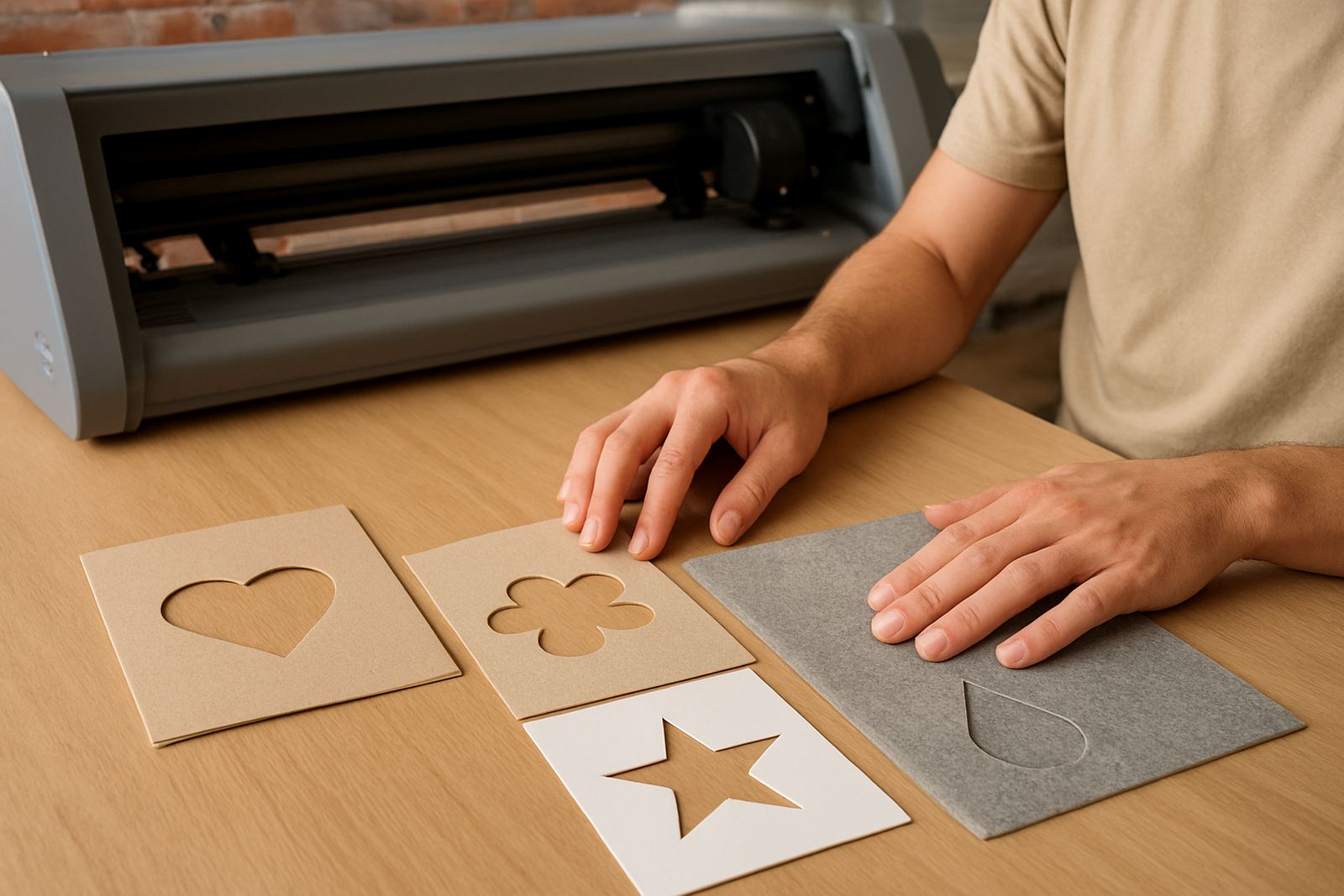
- Check corner lift on a small square or star shape.
- Weed a few fine details, not only large outlines.
- Inspect the backing for scoring or deep grooves.
- Watch the feed path for skew, drag or slipping.
- Confirm registration marks line up before production starts.
These checks sound basic, but they are the difference between predictable work and guesswork. And guesswork gets expensive fast when the job is for a customer with a tight handover date.
Why New Materials Deserve Extra Attention
New media often behaves differently from the samples or old stock you are used to. Thickness, surface coating, adhesive strength and liner type all change how a cutter performs. A premium sticker with a glossy laminate may need a slightly slower speed than a plain matte vinyl. A thinner material may need less blade pressure even if it looks tougher at first glance.
Humidity near the coast can soften some materials and change the way they release. In Gauteng, morning chill and afternoon heat can both affect feed consistency, especially on longer jobs. If a roll was stored against a wall in a cold storeroom in Boksburg, then moved into a warm production area, it may track differently for the first few metres. That is normal, but only if the operator tests and adjusts before the real job starts.
Test cuts also help when you are switching between suppliers, even if the material name sounds similar. Two white gloss sticker stocks can feel alike by hand and still need very different blade pressure. Better to find that out on a small square than on 300 labels for a product launch.
Test Cuts Protect Print and Cut Accuracy
On print and cut work, the print is only half the job. The cut must land exactly where the artwork was placed, and that depends on clean registration. If the media is feeding off square or the camera or sensor is reading slightly wrong, the cut line can drift and you end up with white borders, clipped edges or off centre shapes.
A test cut should be paired with registration calibration whenever a new material is loaded. That is especially important after a blade change, after maintenance, or when the machine has been moved for an install. Even a small shift can affect detailed logos, contour shapes and window graphics with tight outlines.
- Run a short sample before the full production file.
- Confirm the cut matches the printed contour line.
- Check for stretching on long runs after media loading.
- Re-test if the room temperature changes noticeably.
For businesses handling event stickers in Randburg or label work in Germiston, this step keeps reprints down and helps staff catch issues before they become customer complaints.
The Local Cost of Skipping the Check
Skipping a test cut does not always show up as a dramatic failure. More often, it becomes a series of small losses. Ten bad metres here, a delayed delivery there, a second pass on hand weeded work, a blade replaced earlier than expected. Over a month, that adds up to real money.
In Johannesburg, where many shops work under tight turnaround pressure and power interruptions can already compress production windows, there is even less room for waste. If load-shedding changes your schedule, you want the machine ready when the lights come back on. Starting with a test cut means the first metre of paid stock is used correctly, not as trial material.
There is also a people cost. Operators lose confidence when they have to rescue jobs. Supervisors spend time checking work that should have been right the first time. A short test routine gives the whole team a clear starting point, and it keeps the process consistent across shifts.
Build Test Cuts Into Everyday Production
The best shops do not treat test cuts as a last resort. They treat them as part of standard setup. Whether the job is a one off promotional batch or a long production run, the same habit applies: load the media, set the blade, run the test, inspect the result, then proceed.
A practical checklist can keep the routine tight:
- Confirm material type, thickness and finish before loading.
- Set blade pressure and speed according to the substrate.
- Run a small test shape and weed it by hand.
- Check liner scoring, corner sharpness and cut depth.
- Only then start the full run.
This habit also makes training easier. New staff learn that every material deserves a check, not just the difficult ones. That matters for teams in Isando, Midrand and beyond, where different operators may handle the same machine across the week. Consistent setup means fewer surprises and cleaner output.
When Support And Training Make The Difference
Sometimes a test cut shows that the machine is fine but the setup needs attention. Maybe the blade pressure is too high, the media loading is slightly off, or the registration calibration needs a reset. That is where proper training and support help the most. A short induction can prevent repeat mistakes, while a refresher session can help experienced teams sharpen their process after months of steady work.
For businesses that cut in-house, support should cover more than machine buttons. It should cover artwork cut lines, media loading, production workflows, maintenance basics and troubleshooting. A supervisor who understands these steps can spot problems early and keep jobs moving. And when an unusual stock arrives, a quick test cut backed by good advice can save the whole batch.
In the end, a test cut is not about being cautious for the sake of it. It is about control, consistency and protecting material on every job. That small first cut tells you what the full run will do, and in this line of work that is worth a lot more than a guess.