Start with where the sticker will live
The best finish depends on the job first, not just the design. A sticker for a product jar in a cool storeroom has very different needs from a vehicle decal on a Kempton Park bakkie that sits in the sun all day. Indoor use usually calls for clean colour and easy handling, while outdoor use needs more protection against UV, rain and dust.
In Johannesburg, the weather can shift quickly. One week is dry and dusty, the next brings rain and high humidity, and both can affect adhesives and edge lift if the wrong finish is chosen. If the sticker must survive washing, frequent touching, or being wiped down with chemicals, ask for a finish that can take that treatment without looking tired after a month or two.
For short campaigns, a lighter finish may be enough. For long term signage, packaging, or equipment labelling, it is worth spending a little more upfront. That small choice often saves the cost of reprints, rework and complaints later.
Gloss, matt or satin: what each finish changes
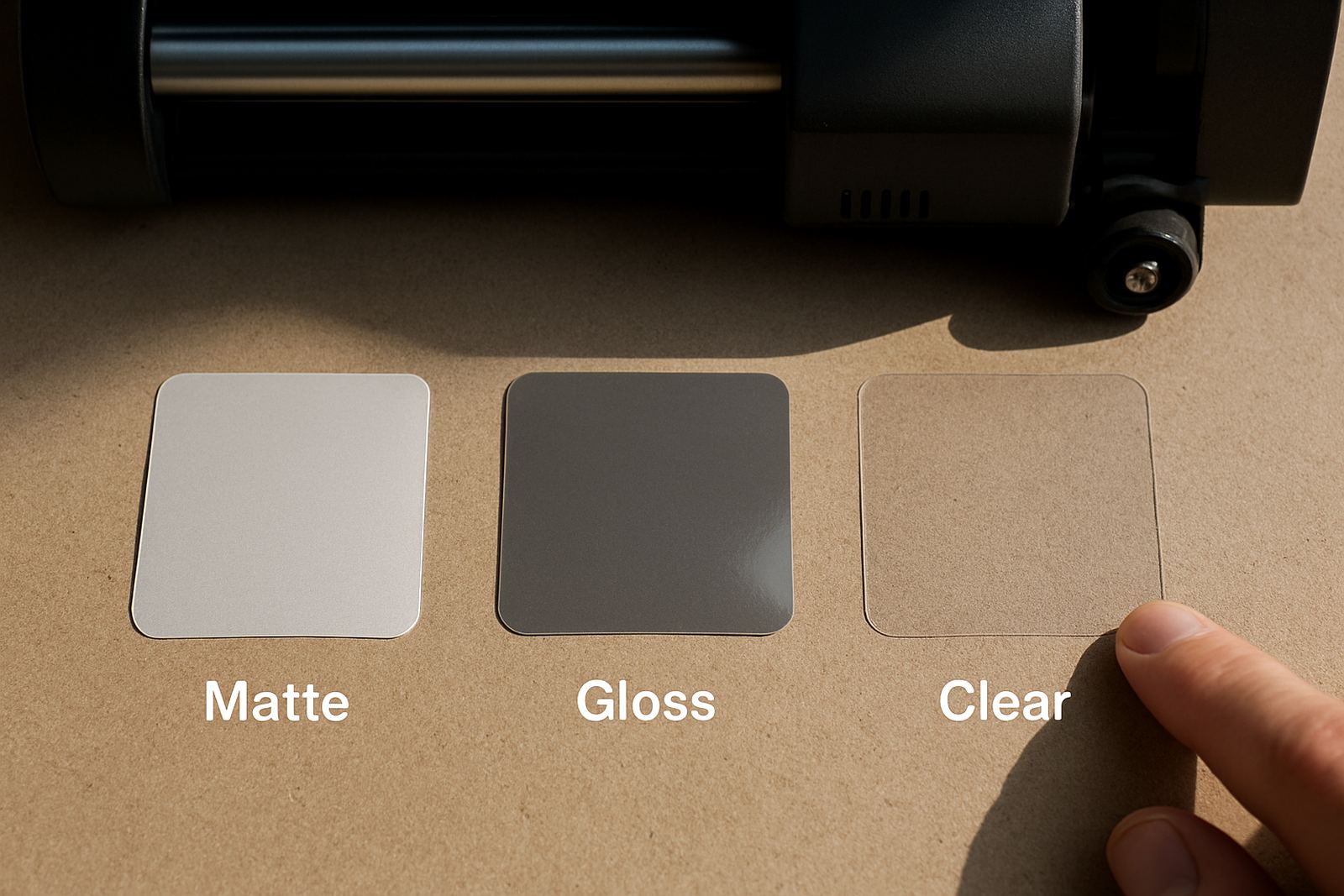
Gloss finish gives strong colour and a sharper visual pop. It works well for promotional stickers, product branding and graphics that must be seen quickly. Under bright light it can reflect, so it is not always the best choice where reading detail matters. On shiny surfaces, a gloss sticker can also show fingerprints more easily.
Matt finish reduces glare and gives a softer, more controlled look. It suits premium labels, instruction stickers and designs where text must stay readable under office lights or in retail refrigeration. Matt can hide minor surface marks better, which is useful on boxes and handled items.
Satin sits between the two. It has a neat appearance without the full shine of gloss, and it is often a safe middle ground for businesses that want a polished look without too much reflection. In practice, satin is a strong choice for mixed use, especially when one sticker range must work across different products and environments.
- Gloss: brighter colour, higher shine, better for attention grabbing graphics
- Matt: low glare, cleaner reading, good for labels and instructions
- Satin: balanced look, practical for retail and general business use
Laminated or unlaminated, and when protection matters
Some stickers are supplied without a top layer, while others are laminated for extra protection. Unlaminated stickers can be suitable for short term indoor use, especially where cost matters and the sticker will not be handled much. They are often used for event handouts, temporary promotions and internal marking.
Lamination adds a protective layer that helps against scratching, fading and light moisture. If the sticker must sit on a fridge door, a window, a toolbox, or any surface that gets touched often, lamination is usually worth it. It also helps the sticker look fresher for longer. On outdoor work, it gives better resistance against sun and general wear, though no finish can ignore poor surface prep.
For businesses in coastal areas like Durban or Port Elizabeth, extra protection can be a practical need rather than a luxury. Salt air and humidity are hard on many materials, so a more protected finish is often the sensible choice. The same applies to labels used on cleaning drums, pumps or workshop equipment where abrasion is part of daily use. Small note, surface cleaning before application still matters more than most people expect.
Promotional stickers need a different balance
Promotional stickers are not only about sticking power. They need to look good in a handout, on a laptop, on packaging, or on a giveaway item. A finish that feels nice in the hand can improve how people respond to the sticker, especially if it is linked to a product launch, expo, school event or trade counter campaign.
For giveaways, a gloss or satin finish often works well because it feels brighter and more presentable. If the artwork includes fine type, a matt finish can keep the message clear. In a crowded setting like a trade show in Sandton or a mall activation in Midrand, the sticker must be easy to notice at a glance but also strong enough to survive being carried around.
- Choose a finish that suits the item the sticker will go on, such as paper bags, plastic tubs or metal signage
- Match the finish to the expected handling, for example light giveaway use or repeated contact
- Allow for the look of the surrounding surface so the sticker does not disappear or clash
If the sticker is part of a larger campaign, consistency matters. A finish that looks slightly different from one batch to the next can make the whole set feel mixed up, even when the colour is correct.
Artwork, cut lines and the final edge
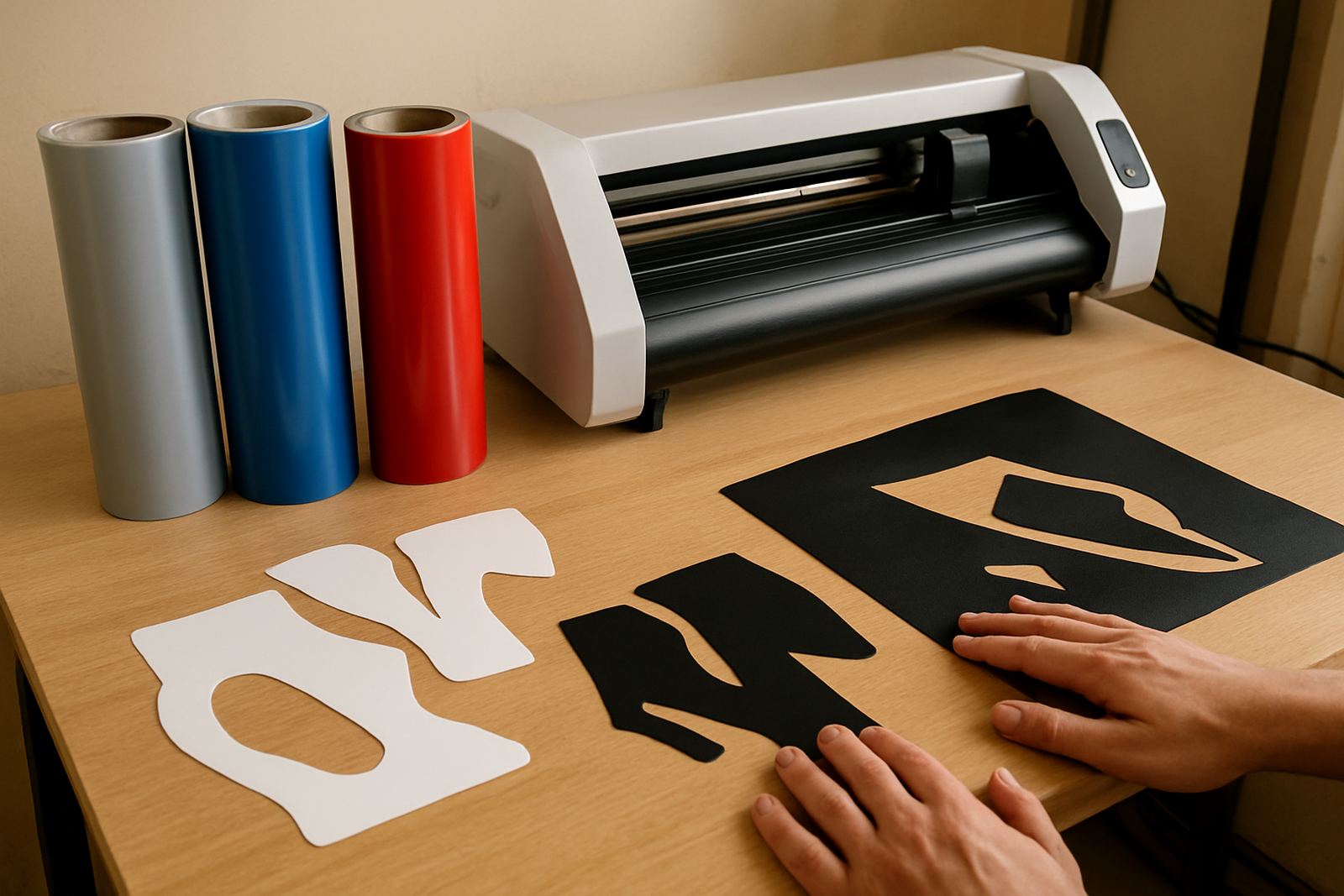
The finish you choose also affects how the sticker is cut and how the final edge appears. Clear cut lines, correct registration and sensible margins all help the finish perform properly. A beautiful matt label with a poor cut line will still look untidy, and a high gloss decal with the wrong blade pressure can lift at the corners.
For contour-cut stickers, the edge detail is part of the presentation. This is especially true for logos, product shapes and custom graphics with curves or sharp points. The artwork should allow enough breathing room so the cut does not nick fine text or important image areas. In production, even the right finish can be spoiled by a rushed setup.
- Keep key text away from the cut edge
- Leave enough border for clean trimming and easy peeling
- Test the finish with the actual substrate before large runs
Businesses often focus on print quality only, but cut accuracy matters just as much. A precise finish and a precise cut work together. That is where practical setup, operator training and careful blade adjustment make a visible difference.
A local example: choosing for shop use in Isando and beyond
Consider a distributor in Isando that needs three sticker types: a matt instruction label for internal stock tubs, a satin product sticker for retail packs, and a laminated gloss decal for delivery crates. Each one serves a different purpose, so one finish would not solve every job. The stock tubs need easy reading. The product packs need a clean shelf appearance. The crates need durability against transport and cleaning.
Now add real working conditions. During load-shedding, production schedules can shift and stored material may sit longer before use. In a humid week or after a dusty spell, adhesives and edges can behave differently if the wrong material was chosen. That is why it helps to decide on finish with the end use in mind, not just the artwork proof.
For businesses from Randburg to Germiston, the same rule applies. Ask where the sticker goes, who touches it, and how long it must last. Once those three points are clear, the finish choice becomes easier and the result is usually better. A practical finish is not about making every sticker fancy. It is about making the sticker do its job properly.