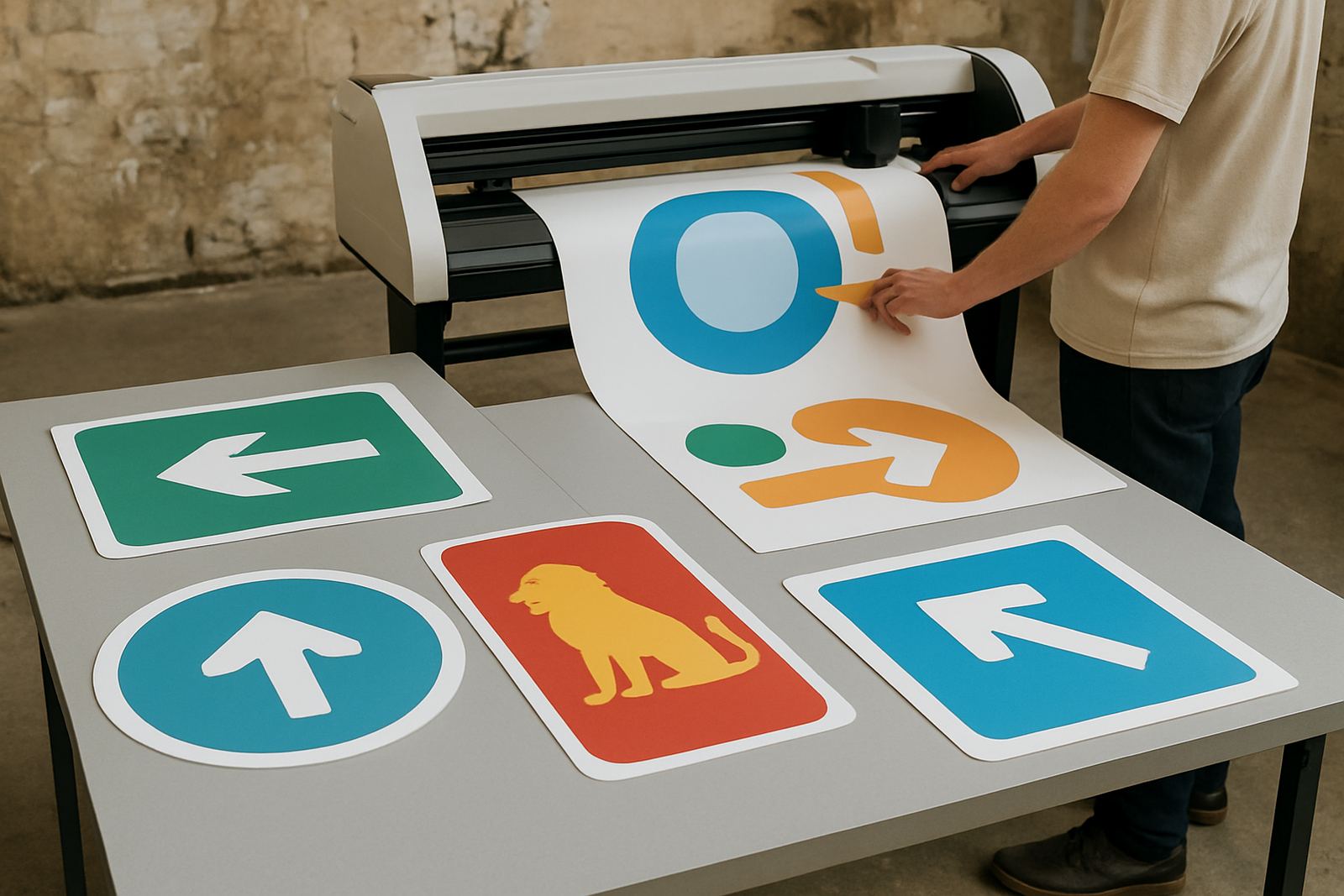
Start with the job life and where the sticker will live
Before you choose a material, work out how long the sticker must stay in place and where it will be used. A short-run promo sticker for a Sandton event table is not the same as a vehicle decal sitting in sun, dust and rain in Germiston or Boksburg. Indoors, you can often use lighter materials and simpler finishes. Outdoors, especially in Gauteng heat or coastal humidity, you need better face film, adhesive and often a laminate.
Ask these first questions: Will it be handled often? Will it sit on glass, powder coat, plastic or painted metal? Does it need to come off cleanly later? If the answer is yes to frequent handling or weather exposure, avoid the cheapest stock. That usually costs more in reprints and call-backs.
- Indoor label or decal: short life, lower abrasion
- Outdoor sign or vehicle use: UV, water and dirt resistance
- Promo handout: fast application, good colour, controlled cost
- Retail or compliance label: adhesive must suit the surface and removal needs
Choose the face material before you think about the blade
Sticker media starts with the face stock. Paper is fine for dry indoor use, carton labels and short-life promo packs, but it is not the first choice where moisture or handling is common. Vinyl is the usual option for printed stickers because it offers better flexibility, strength and cleaner cutting on contour jobs. For textured or curved surfaces, choose a film that can conform without lifting at the edges.
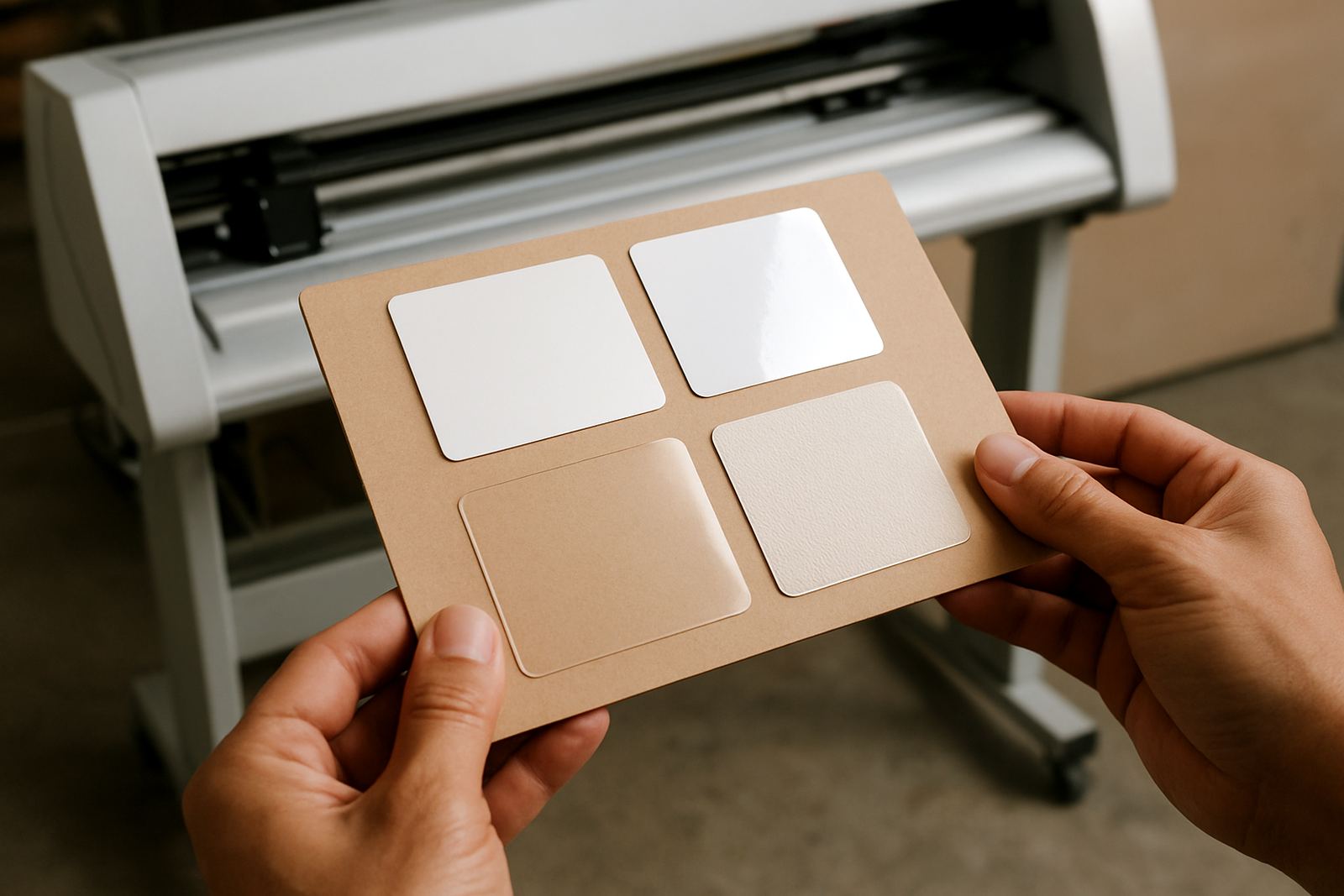
Clear, white and coloured films each have their place. White gives the best print pop for logos and artwork. Clear works well when you want the surface to show through, but only if the print has been planned for that effect. Coloured films are useful for cut vinyl lettering, warnings and basic labelling. If a job will be split across several units, keep the same face stock through the run so the finish stays consistent.
- Paper: low cost, dry indoor use, short life
- Vinyl film: general purpose print-and-cut work
- Clear film: window graphics and product visibility
- Coloured film: lettering, symbols and simple branding
Match the adhesive to the surface and removability
Adhesive choice matters just as much as the sticker face. A strong permanent adhesive suits long-life labels on clean, smooth surfaces. A removable adhesive is better for promotions, temporary pricing and event graphics where the sticker must lift off without tearing or leaving heavy residue. On some plastics, low-energy surfaces can be tricky, so test first rather than guessing. That is where a small sample run saves time.
For outdoor work, check whether the adhesive handles heat cycles and dust. In areas like Isando and Midrand, plant rooms and warehouse shutters can get hot during the day and cool fast at night, which puts stress on the bond. On cold storage or damp walls, moisture can cause early edge lift if the adhesive is not suited to the task. A clean, dry surface still matters more than people think.
- Permanent: long-term use, security labels, outdoor durability
- Removable: promos, temporary branding, short campaigns
- High tack: rough or difficult surfaces
- Low residue: glass, POS units and short-term graphics
Use laminate and thickness to control wear, shine and handling
If the sticker will be touched, washed or exposed to sun, add a laminate or choose a thicker film. Laminate protects print from scuffing and helps keep colour stable. Gloss gives a brighter finish and can make photos and bold graphics stand out. Matte is better where glare is a problem, such as indoor retail displays under strong lighting. For machine-applied or hand-applied labels, thickness also affects feed consistency, especially on smaller contour jobs.
Do not over-spec a promotion sticker if it only needs to last a few weeks. But do not under-spec a product label that will be handled daily by staff or customers. The middle ground is often a medium-thickness print film with a light laminate. It holds shape well on the cutter and gives the installer less trouble during application.
When in doubt, check whether the job needs fingerprint resistance, water resistance or extra stiffness for automatic feeding. Those details can change the whole material choice.
Check cut quality, registration and the size of the detail
Fine logos, small text and intricate outlines need a material that cuts cleanly and weeds without tearing. The cleaner the face film, the better the edge finish. Poor material choice shows up fast on tight corners, tiny counters and thin lines. If a job includes several hundred identical decals, test one sheet first and inspect the cut edge, backing release and registration marks.
For print-and-cut work, material flatness and consistency are important. Curl, stretch and uneven liner tension can throw off registration, especially on long runs. Keep sheets and rolls stored flat in a dry area and allow them to acclimatise before production. In hot Isando workshops, a roll left too close to a roller door can shift enough to affect feeding. Small changes become costly on a full day job.
- Inspect one sample for edge lift and tiny cut points
- Check whether the liner feeds smoothly through the cutter
- Confirm the smallest readable text size before production
- Make sure registration marks stay clear and consistent
A simple selection checklist before you place the order
A practical checklist keeps sticker buying simple and reduces wastage. Start with the end use, then confirm the surface, exposure and quantity. If the sticker is for a campaign across branches in Sandton, Randburg and Germiston, ask whether each site has the same wall paint, glass type or packaging. The wrong adhesive on one surface can lead to lifting even when the artwork is perfect.
Use this quick sign-off before production:
- Indoor or outdoor use confirmed
- Expected life confirmed, such as 2 weeks, 3 months or 2 years
- Surface type checked: glass, metal, plastic, painted wall or cardboard
- Removal requirement confirmed: permanent or clean lift
- Finish chosen: gloss, matte or clear
- Quantity and application method confirmed
If the job is for a promotion, choose the material that gets the message across without unnecessary spend. If it is a label, packaging item or exterior decal, choose durability first. That order saves time, money and frustration on the install.
Keep a local support plan for installs, training and rework
Sticker material selection is easier when the production team and installer talk before the job starts. If the cutter operator knows the media type, blade pressure and feed behaviour in advance, the result is more consistent. For teams handling repeat work, build a short standard for each common material, including artwork cut lines, media loading and basic maintenance. That helps with load-shedding interruptions too, because the team can restart with the same settings after a stop.
For businesses that need cutter installs, operator induction or troubleshooting support nationwide, a local back-up plan helps keep jobs moving. A quick refresher or supervisor coaching session can prevent the same mistakes from repeating on the next run. When the material is right and the process is clear, the final sticker looks cleaner and lasts longer.