Where safety signage fails on site
Most safety sign problems start long before installation. The client has the right warning text, but the label is too small, the corners lift in a dusty workshop, or the cut line does not match the print. In warehouses, factories, loading bays and retail stock rooms across Johannesburg, that usually means people ignore the sign or dont trust it. On a busy floor, that is a problem you can avoid.
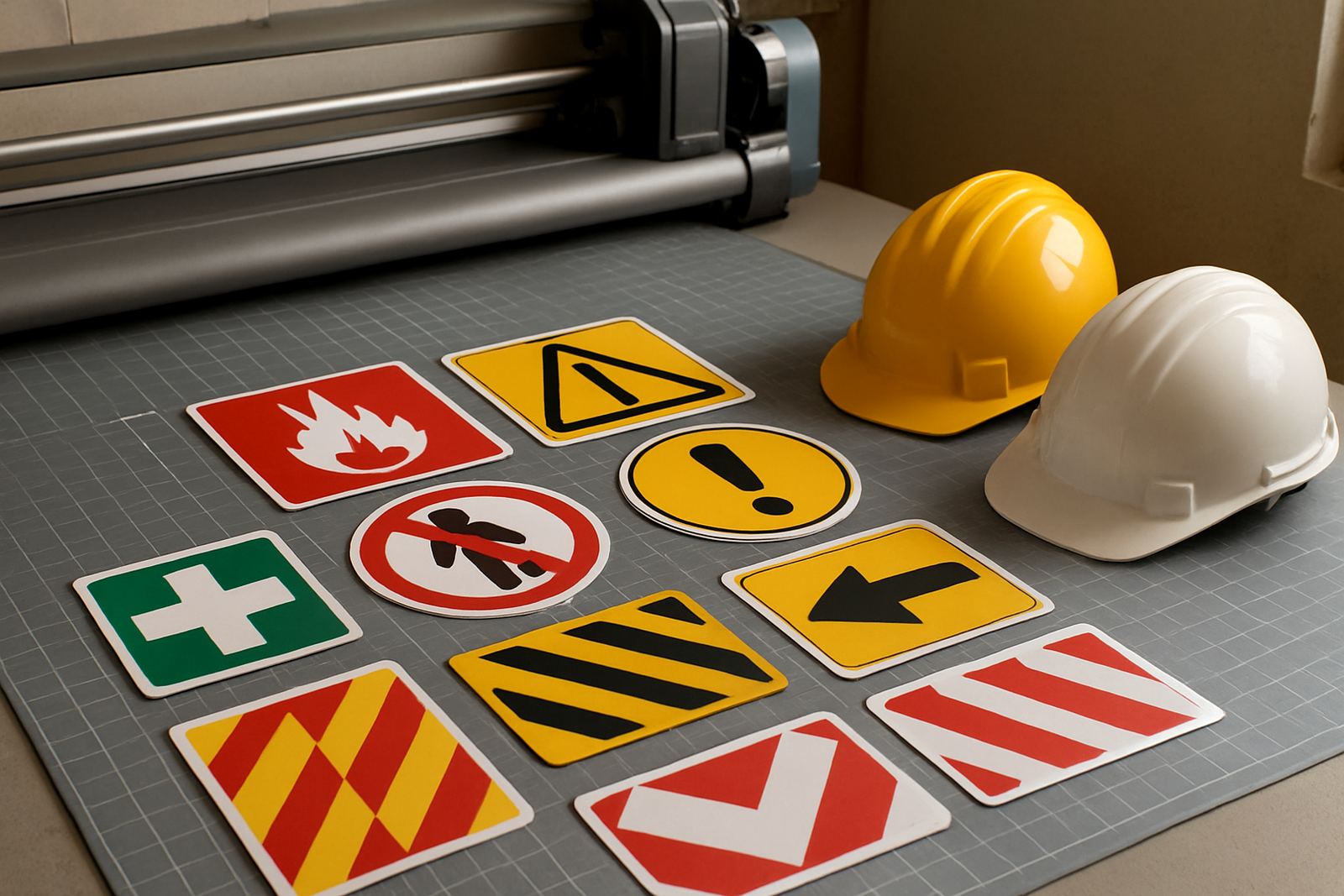
For safety signage, the main job is not decoration. It is visibility, consistency and legibility from the correct viewing distance. If the sign is for a machine guard, electrical panel, chemical store or pedestrian route, the shape must follow the message and the material must suit the site. Coastal humidity in Durban, dust in Gauteng and outdoor sun all change what works best.
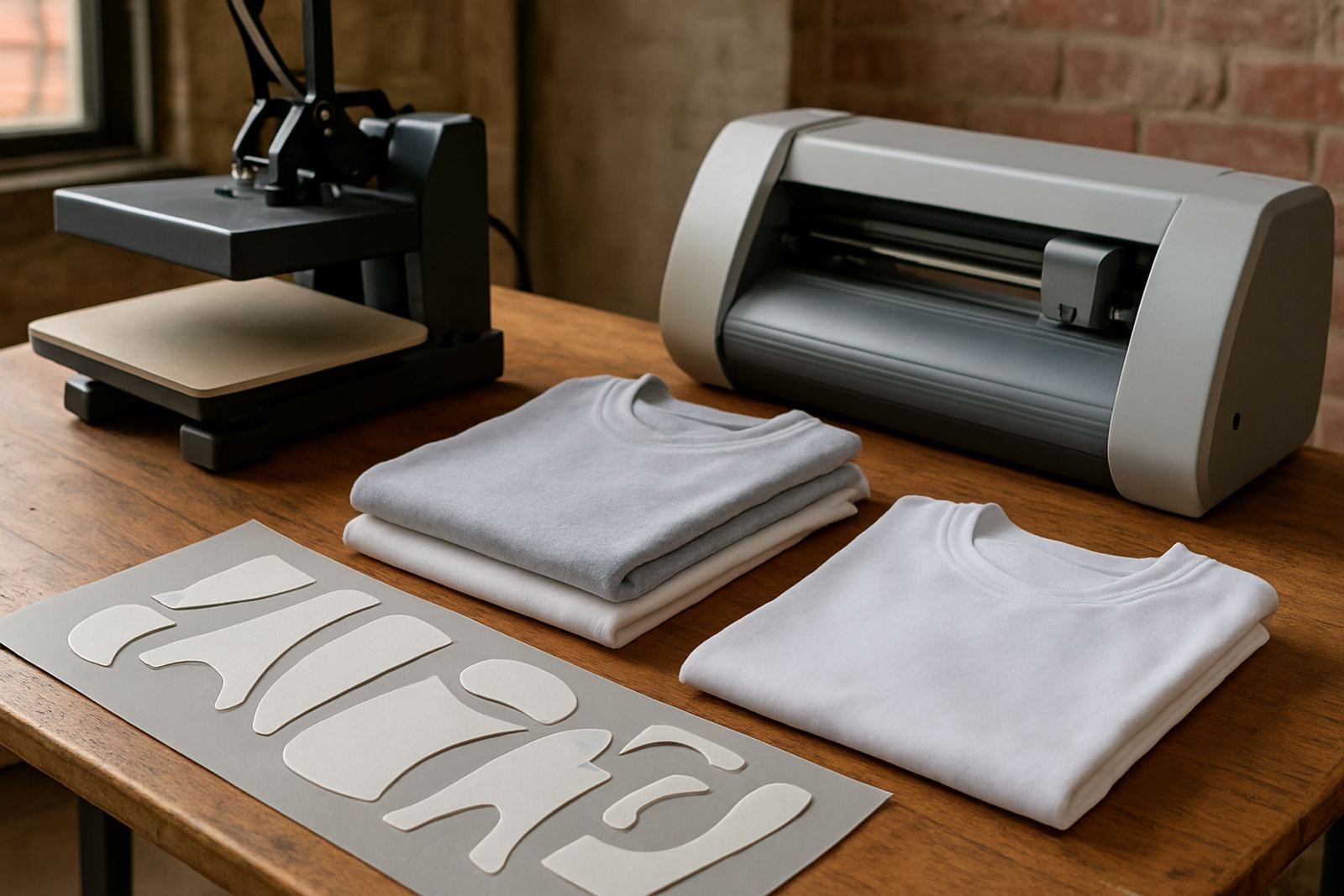
Typical equipment set for cut safety labels
Most safety signage jobs use print-and-cut workflows with a contour plotter matched to printed sheets or rolls. The usual set-up is simple in principle but must be calibrated carefully so the cut tracks the printed registration marks every time. A small shift can turn a neat hazard label into waste.
- Printed vinyl or label stock for warning stickers, machine labels and directional markers
- Contour plotter with registration reading for accurate cut lines
- Sharp cutting blades suited to the media thickness
- Transfer tape for shaped graphics and grouped sticker sets
- Lamination where extra scuff resistance or chemical resistance is needed
- Backing boards or application tools for flat fitting on site
For larger sites, teams often need a mix of short-run label production and repeated sets for different departments. That is where consistent blade pressure and registration calibration matter more than speed. If the first sheet is right but the tenth sheet drifts, the whole batch becomes expensive.
Layout and planning advice before anything is cut
Good safety signage starts with a site plan, not a cutter. Before production, map where the signs must be seen, what language is required and whether the message is meant for foot traffic, drivers or machine operators. In many South African workplaces, you may also need bilingual wording, site-specific numbering and clear symbols for visitors who are not familiar with the space.
Keep the layout practical. Use enough white space around warning text, keep icon sizes consistent and avoid overcrowding a panel with too many messages. When signs are too dense, workers read nothing. For floor markers, check traffic flow and turning space first so the markers do not peel at high-wear points.
- Measure viewing distance before choosing label size
- Separate mandatory instructions from general information
- Allow for mounting holes, rounded corners or die-cut shapes
- Plan for cleaning, abrasion and washdown where needed
- Match colours carefully for danger, caution and instruction zones
Common mistakes that cost money on safety jobs
The biggest mistake is treating all signage the same. A sticker for a storeroom shelf is not the same as a warning near a hot surface or moving blade. Another common issue is poor media loading. If the roll is skewed, the contour cut wanders and the corners lift later. On loaded production days in Isando or Germiston, that lost time adds up fast.
Blade pressure is another frequent problem. Too little and the cut does not release cleanly. Too much and you score the backing or distort the print. Registration calibration also needs checking after blade changes, a machine move or a power interruption. With load-shedding, it is worth checking the machine after every restart instead of assuming it is still set. Small errors at the start can cause a whole batch to miss spec, which is costly on tight site deadlines.
Budget ranges for safety signage cutting in Rand
Budget depends on quantity, size, material and whether the job needs lamination, site numbering or repeated reprints. A small run of cut labels for a workshop might sit in the low thousands, while larger compliance packs for a distribution centre can move up quickly because of sheet count and finishing. Most clients want a clear cost before production, especially when different departments order their own sets.
As a rough guide, simple cut sticker sets for basic hazard marking may start from around R850 to R2 500 for a small batch. Mid-size jobs with multiple shapes, laminated finishes and careful registration can run from about R3 000 to R9 000. Larger site rollouts, multiple sizes or nationwide installations can go beyond that, depending on the number of locations and whether the signage needs repeated maintenance stock. It helps to price the first production run properly, then keep a backup plan for spares and replacements.
Installation, training and support that keeps signs working
Good sign cutting is only part of the job. Teams also need to know how to handle the media, check the cut lines and apply the finished pieces without bubbles or edge lift. That is why operator induction and maintenance basics are so useful for safety work. A well-trained production team wastes less material and catches issues before they leave the floor.
Contour Cutting supports businesses from Isando with cutter installs nationwide, plus help through Sandton, Midrand, Germiston, Boksburg and Randburg support areas. The team includes Sibusiso Nkosi, Lerato Mokoena, Johan van Wyk, Ayanda Dlamini, Nadia Jacobs, Thabo Molefe and Ridwaan Daniels, so clients can get help with production workflows, troubleshooting, supervisor coaching and remote refresher sessions when needed. For sites with steady output, that support keeps the signage line moving without last minute panic.
When to call for a specialist cut job
If the signs need exact corners, repeated batches, or a finish that must hold up in dust, humidity or heavy handling, it is worth using a specialist cutting service. Safety graphics often look simple from a distance, but they are unforgiving when the shape is wrong. One crooked warning label can make an entire wall or machine station look careless.
For businesses that need safety labels, hazard markers and compliance graphics produced cleanly and consistently, precision cutting saves time and rework. It is the difference between a sign that just exists and one that does its job properly.