When office signage must look neat from every angle
Most office signage problems start with the same issue: the wording is right, but the finish looks hurried. On glass partitions, lift lobbies and reception walls, any wavy edge, poor spacing or lifting vinyl shows immediately. That is why offices in Sandton, Isando, Midrand and even smaller corporate parks around Boksburg ask for cut graphics that hold a crisp line and stay readable under bright lights.
Contour cutting is ideal where the design includes logos, arrows, room names, floor numbers or privacy bands. It gives you a controlled edge around each shape, so the final piece looks made for the space and not just pasted on at the end. For internal wayfinding, that matters because people must read it quickly and move without confusion. A sign that looks tidy also tells visitors the whole office is organised.
In South African offices, the setting also matters. A glass partition near the entrance gets direct sun. A coastal branch may deal with moisture and aircon changes. A busy shared office can have constant traffic and cleaning. Good cut graphics are planned with the site conditions in mind, not only the artwork.
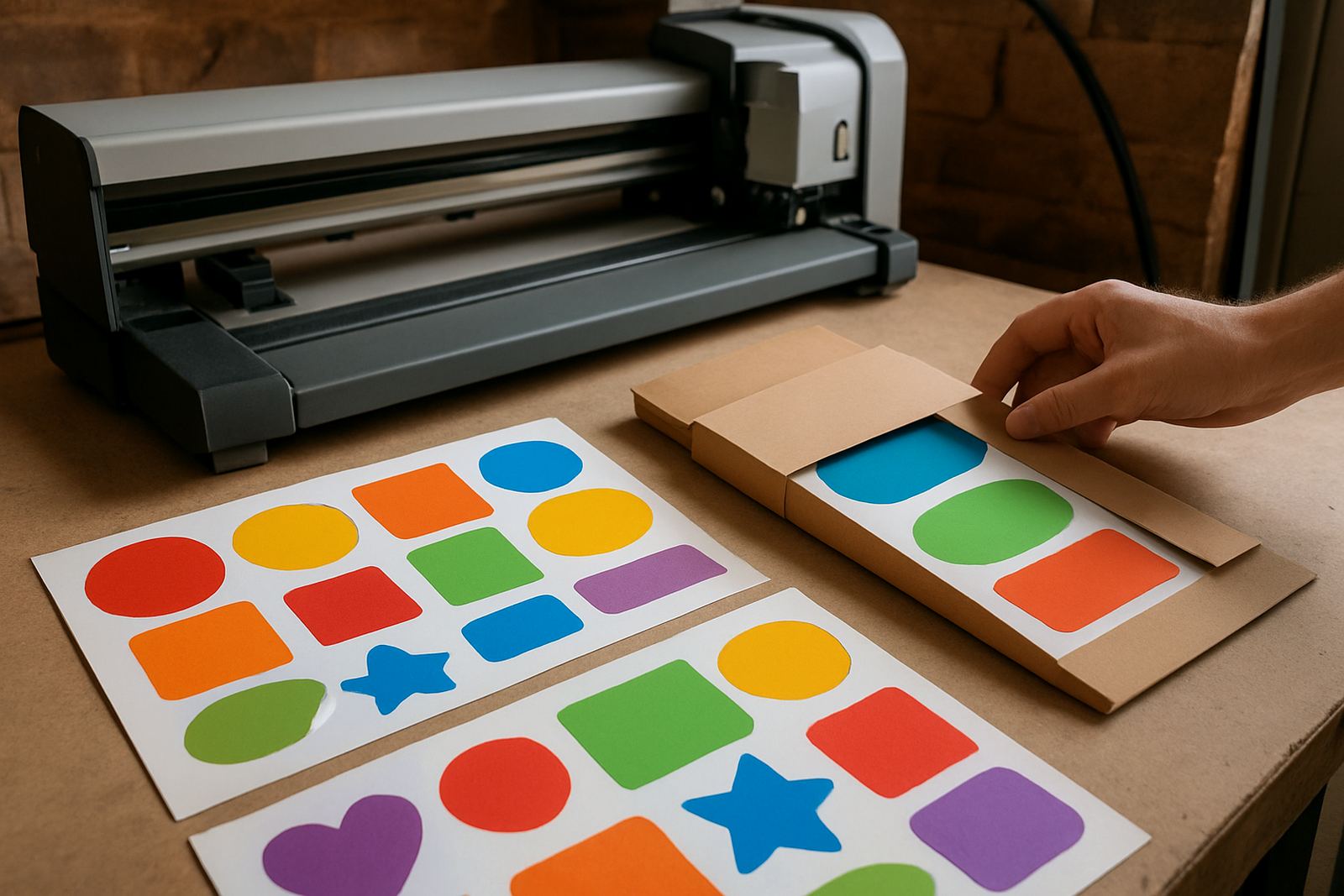
Typical equipment set for office signage production
A suitable office-signage setup usually combines print and cut work with accurate media handling. The aim is not just speed, but repeatable output when you need the same room labels, door names or directional arrows across a whole building.
- Print-and-cut contour plotter for decals, logos and shaped graphics
- Vinyl cutter for solid colour text, simple cut lettering and short runs
- Application table and trimming tools for clean finishing
- Good lighting for checking edge quality and registration marks
- Backup power for load-shedding so jobs do not fail mid run
For offices with repeated rollouts, such as branches, clinics or shared workspaces, the ability to keep media loading consistent is important. One bad feed can throw off a batch of reception logos or door labels. That is why blade pressure setup, registration calibration and maintenance basics form part of the practical setup. If the machine is not aligned, you spend time correcting little errors that should never have been there in the first place.
Layout planning for glass partitions and reception walls
Good office signage starts before the cutter is switched on. Measure the actual wall or glass panel, not only the plan. In Johannesburg buildings you will often find slight differences between the drawing and the fitted space, especially after tenant changes. Check where handles, aluminium frames, light switches and fire signage already sit, because those features affect where the graphic can land.
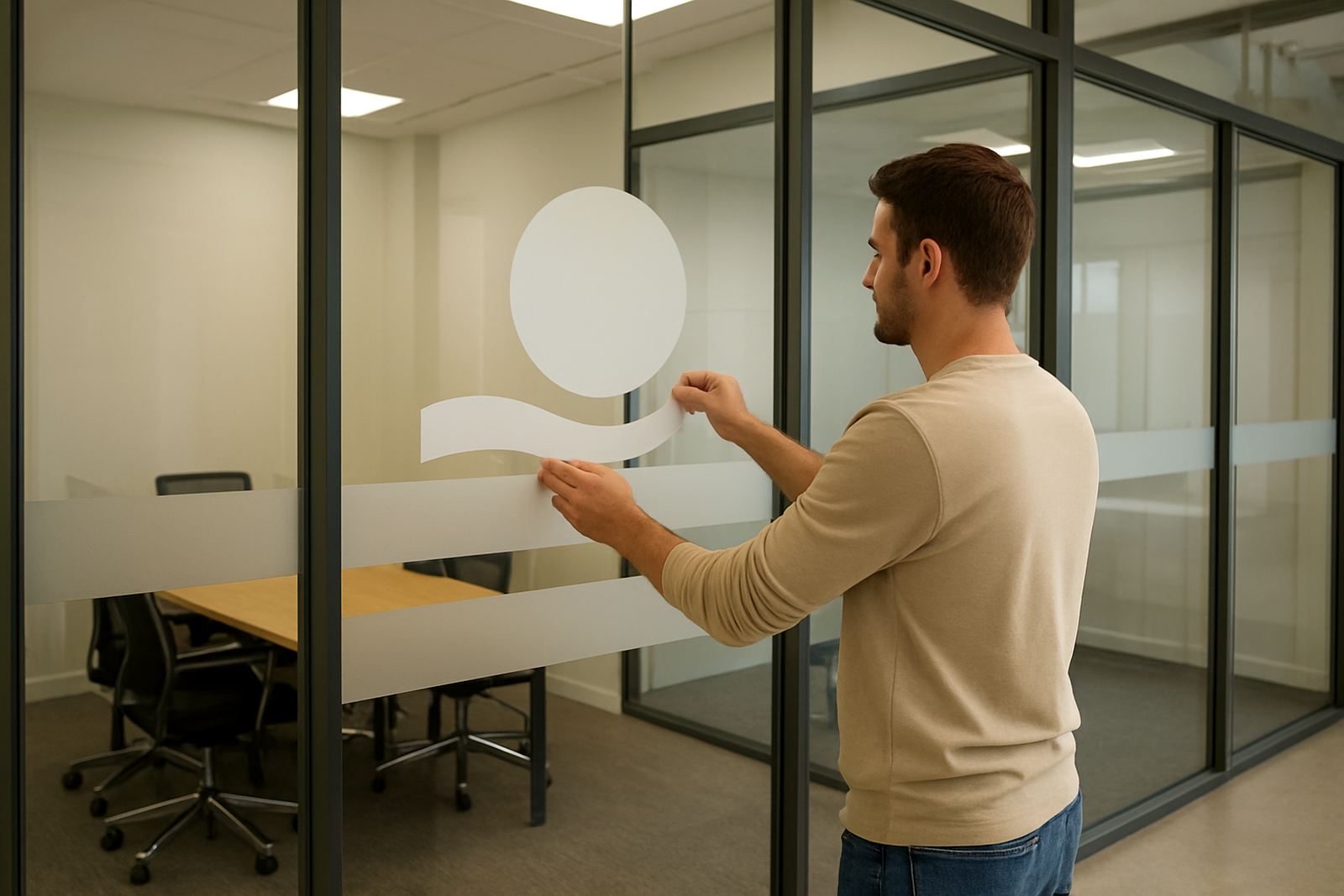
For glass partitions, think about viewing height. Privacy strips should sit where seated staff still have light, but standing visitors do not miss the boundary. Reception branding should be centred to the sightline from the entrance, not to the wall alone. Wayfinding signs need to be placed at decision points, such as lift lobbies, corridor splits and door approaches.
- Confirm the exact panel size and visible area
- Allow for frame lines, door gaps and hardware
- Keep text large enough to read at 2 to 5 metres
- Test contrast against the wall colour or glass tint
- Check building rules for drilling, vinyl placement and fire exits
If the office is in a managed property, ask about landlord approvals before installation. Some buildings want non-invasive fixing only, while others allow more permanent mounting. Getting that right avoids delays and extra callouts.
Common mistakes that make office signs look untidy
A lot of poor office signage comes from rushing the artwork or ignoring the site. The cut may be accurate, but the design itself can still look wrong if the sizing is off or the colours do not contrast enough. Thin fonts on frosted glass, for example, can disappear once the sun shifts during the day.
Another common error is cutting to the wrong origin point. If the registration calibration is even slightly off, logos can clip at the edge or sit a few millimetres out of position. On a single sticker that may seem small, but on a row of doors it becomes obvious. The same is true of blade pressure setup. Too much pressure can nick the backing or pull delicate details; too little and corners lift during weeding.
People also forget how offices are cleaned. Harsh cloths, sprays and daily contact around fingerprints can weaken low-grade material. For reception branding and glass privacy film, material choice should match the environment, not just the budget. A sign that has to be replaced after six months costs more than doing it properly first time.
Budget ranges for office signage jobs in Rand
Budgets vary according to size, quantity and whether the job includes print, cut, install and training support. For a small office in Randburg or Germiston, simple door lettering and a few room markers may start from around R1 500 to R4 000. A reception feature with shaped logo work and several wayfinding items often lands between R5 000 and R15 000, depending on finish and install complexity.
Larger fit-outs in Sandton, Midrand or airport-adjacent business parks can move into the R18 000 to R45 000 range when you have multiple floors, repeated labels, compliance signs and a full internal wayfinding set. If the project needs operator induction, workflow setup or troubleshooting on site, factor in training and support as a separate line item. That is usually better than paying twice later when staff are still learning the process.
When evaluating cost, compare what is included. Does the quote cover artwork cut lines, media loading assistance, blade pressure setup and registration calibration? Is maintenance basics training included? Are remote refresher sessions available if your team changes? Clear scope saves argument later and keeps production moving.
Support for office signage teams and installers nationwide
Contour Cutting works from Isando in Johannesburg and supports cutter installs nationwide, with branch support for Sandton, Midrand, Germiston, Boksburg and Randburg. That local coverage matters when a client needs help starting up, retraining operators or sorting a production fault before a deadline. A missed sign on a Monday morning can affect a whole office move, so response time counts.
The team includes practical support for operator induction, supervisor coaching and troubleshooting sessions. For offices producing their own signs, this can mean learning how to set blade pressure, feed media correctly and keep registration steady from one batch to the next. If a customer only needs a premium sticker cutting service, the same care still applies because the final result must arrive ready for install and look right on the wall.
Whether the job is a small suite in Isando or a multi-floor office in Sandton, the aim is the same: cut graphics that are clean, readable and suited to the space. That is what keeps reception areas sharp and wayfinding easy to follow.