Start with the job, not the roll
Before you load anything, match the material to the end use. A short run of promotional stickers for indoor handing out needs very different media to a fleet decal for a courier van in Durban or a safety label that must handle sun, rain and washing. If the wrong stock is used, you can end up with lifting corners, poor adhesion or cuts that do not weed cleanly.
When in doubt, test a small section first. Check the face film, adhesive type, liner thickness and whether the job will be cut straight through or kiss-cut for sheets and rolls.
- Indoor promotions: easy-weed self-adhesive vinyl or paper label stock
- Outdoor signage: UV-stable vinyl with a suitable adhesive
- Short-term campaigns: removable stock for clean take-off
- Fine detail work: smooth face films with consistent thickness
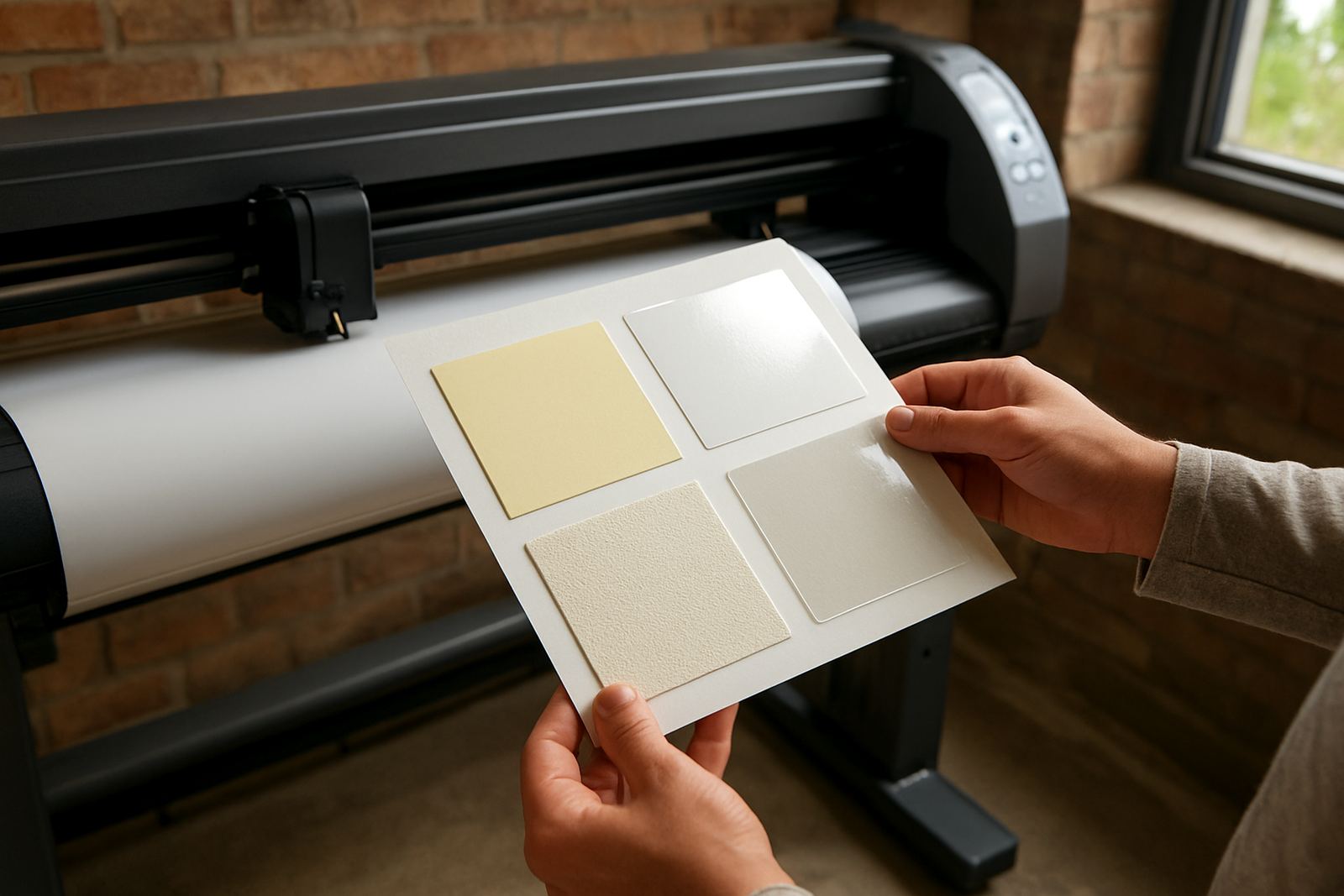
Common sticker stocks used every day
Most contour jobs start with standard sticker media. These are used for branding, promos, product labels and packaging runs where speed matters. Paper stickers are useful for low-cost indoor labels, while synthetic sticker stocks handle handling and light moisture better. For food packs or chillers, ask for a material that will stay flat and not curl at the edges.
In high-volume work, consistency is the key. A roll that varies in thickness can cause the blade depth to shift and the cut line may wander, especially on long runs.
- Paper label stock: cost-effective for indoor use
- Polypropylene or similar synthetic stock: better for moisture
- Gloss finish: sharp colour for retail packs
- Matt finish: easier to write on and less glare
Vinyl choices for signage and vehicle work
Vinyl is the usual choice for signs, branding panels and vehicle graphics. Calendered vinyl suits many flat applications and short to medium term use. Cast vinyl is softer and copes better with curves, rivets and awkward panel shapes, which makes it a better fit for vehicle lettering and detailed wraps around side mirrors or mouldings.
For coastal areas like Gqeberha or Durban, a quality outdoor vinyl can make a real difference because humidity and salt air can affect cheaper stock. On site, allow for proper surface prep and give freshly applied graphics time to cure before washing.
- Calendered vinyl: flat signs, boards and general branding
- Cast vinyl: curves, vehicles and complex surfaces
- Translucent vinyl: lightbox and illuminated sign work
- Reflective vinyl: safety marking and night visibility
Speciality media for detailed or tricky jobs
Some jobs need more than standard sticker or vinyl stock. Metallic films, frosted window film, textured media and removable adhesives all have their place. These are often used for retail displays, seasonal promotions, office privacy graphics and short-term event branding. They can also be useful where the client wants a stronger finish or a specific look without printing extra effects.
Speciality media may cut beautifully but still need slower, more careful setup. A slight adjustment in blade pressure or speed can save a lot of waste, particulary on thin metallic films.
- Frosted film: privacy glass and office partitions
- Metallic film: premium branding and display details
- Removable adhesive stock: temporary campaigns and rentals
- Textured stock: retail accents and decorative work
How to load and test material before production
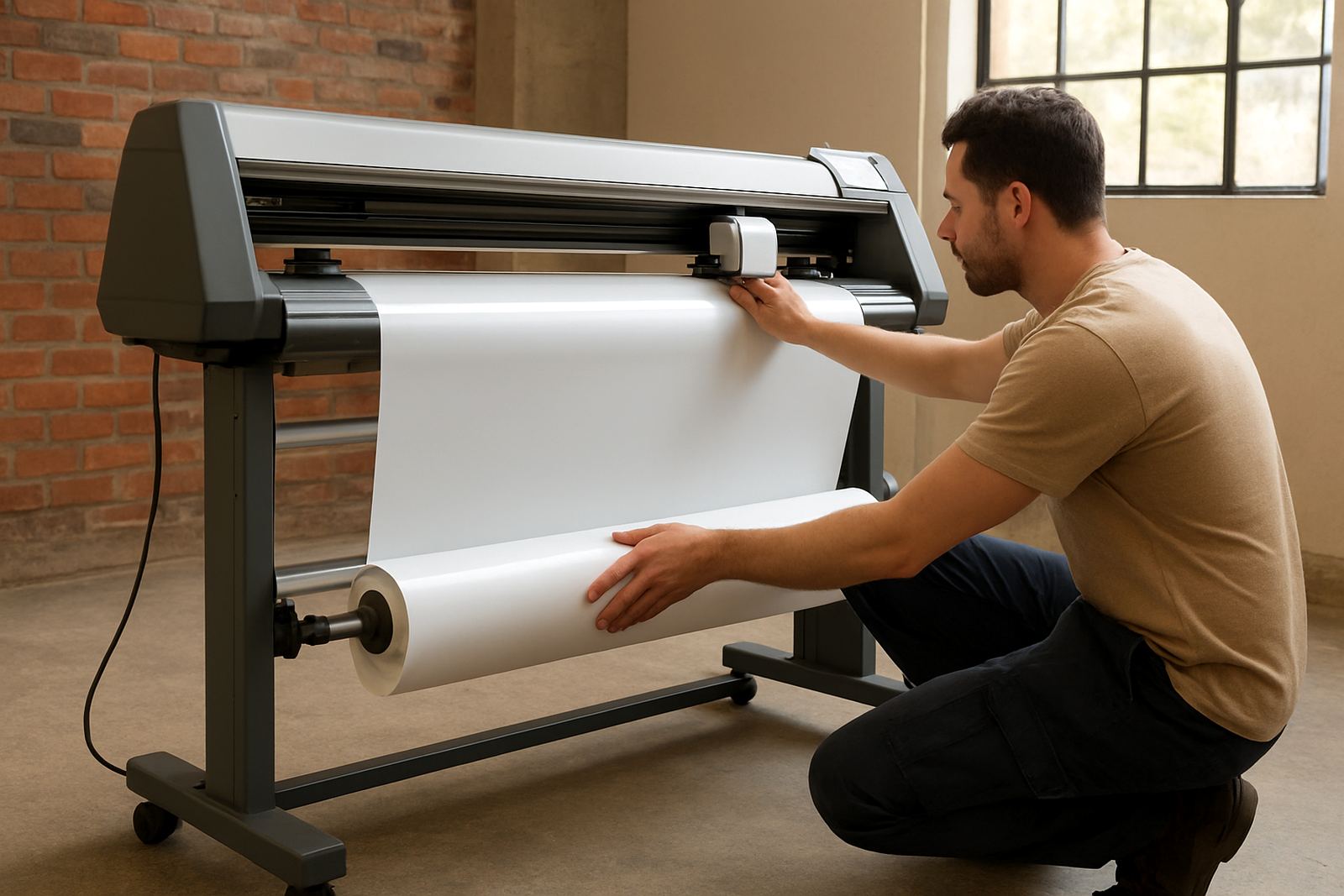
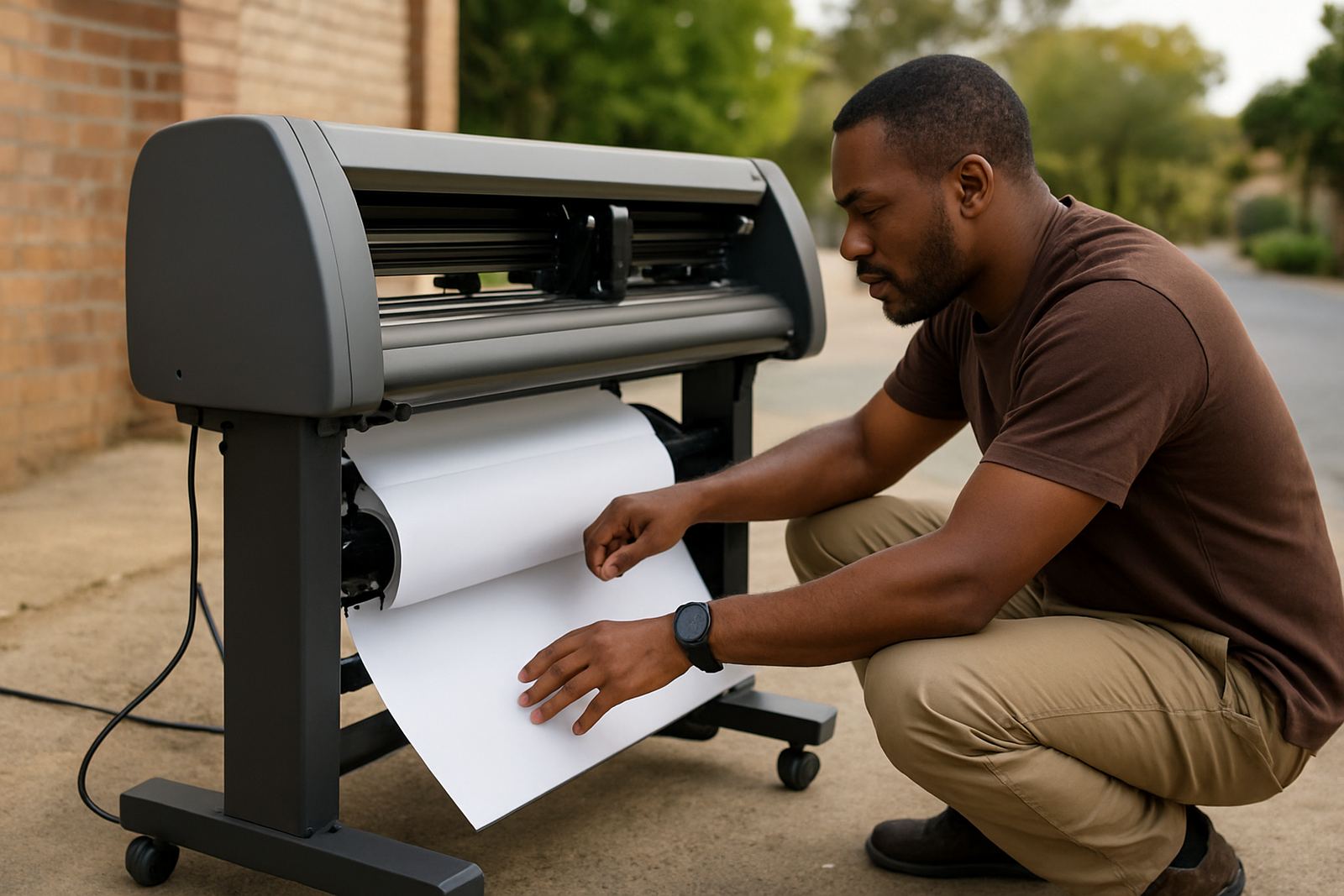
Start with a clean feed path and make sure the roll or sheet sits square. Feed the media straight, set the pinch rollers correctly and check that the edge is not crushed or curled. If the stock has been open in a warehouse through load-shedding or a damp week in Isando, let it settle before cutting so the tension is more even.
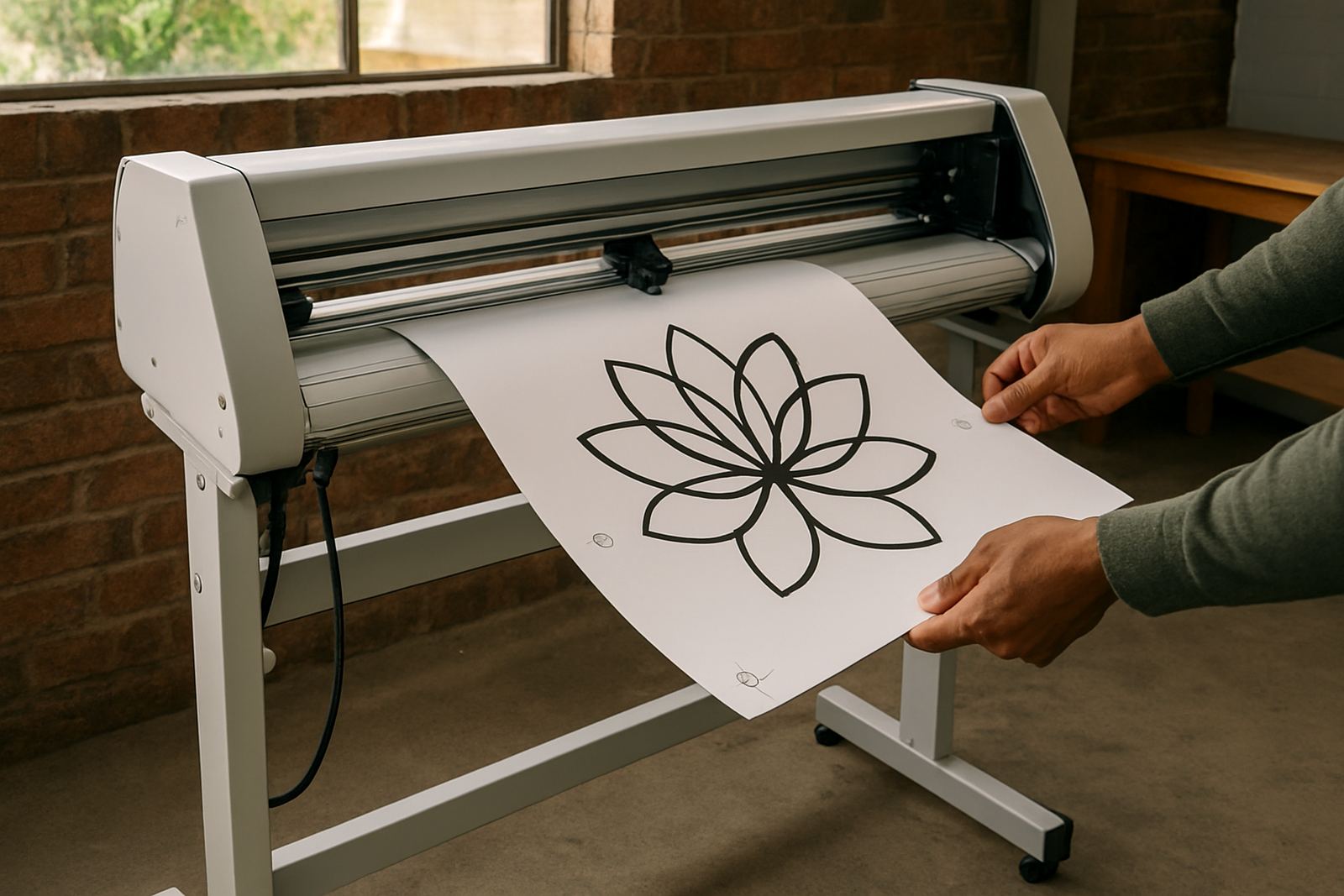
Use a small test cut every time you change media. A clean test should weed easily, leave the liner intact and not tear at corners. If the blade is dragging, back off the pressure slightly before you waste a full roll.
- Check roll edges for dents, dust and moisture
- Align the media square to the pinch rollers
- Run a test cut and weed a small shape
- Adjust blade pressure in small steps only
Storage, handling and everyday care
Even good media can perform badly if it is stored badly. Keep rolls upright or on proper racks, away from heat, direct sun and floor moisture. In Gauteng, dust builds up quickly, so sealed storage helps. For sheets, avoid bending the corners and do not stack heavy cartons on top because the liner can bow and the cut path will then track unevenly.
Label each roll clearly with the material type, finish and purchase date. That saves time when you are under pressure and need a media that suits a fast turnaround.
- Store between jobs in a dry, shaded area
- Keep rolls off concrete floors
- Mark each roll with the job type and finish
- Use older stock first to avoid ageing issues