What a sheet fed cutter does in daily production
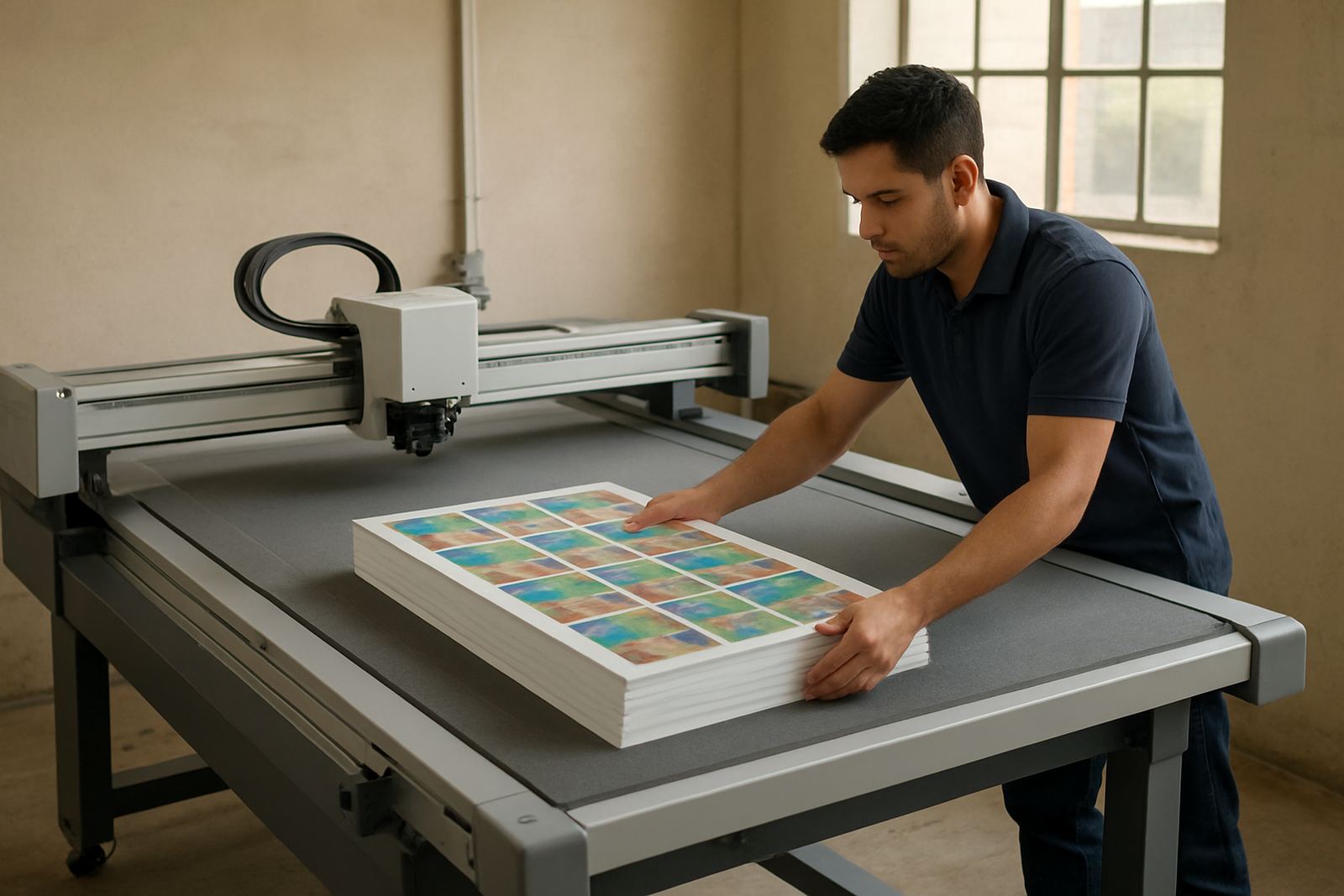
A sheet fed cutter is built to take individual sheets, register the print, and cut the final shape with repeatable accuracy. Instead of feeding a roll, the operator loads flat material one sheet at a time or in a controlled stack, which makes it easier to handle labels, tags, decals, carton flats and small display boards. For many print rooms in Isando, Sandton and Midrand, that means better control on short runs and less risk of scuffing or shifting printed work.
The key benefit is consistency. Once the artwork cut lines are set correctly, the cutter follows the printed registration marks and trims to the same outline every time. That matters when you are working with full colour label sets, nested shapes or jobs with tight bleed and border tolerances. It also helps reduce waste on more expensive media, especially where the sheet costs are high.
Contour Cutting supplies and installs sheet fed cutter systems for businesses that need dependable finishing rather than guesswork. We work with production teams that want a practical unit they can run day to day, without needing to pull in extra labour for hand finishing.
Typical sheet sizes, feed options and cut detail
The right configuration depends on the sheet size, media thickness and how many jobs you want to finish per shift. Common setups suit A3, SRA3 and larger custom sheets, while certain machines can take board sizes closer to small signage format work. For businesses producing stickers and labels, a compact feed path is often easier to manage than a wide format system.
Options usually include vacuum hold-down, adjustable side guides, optical registration cameras, and settings for different blade pressures. Some units handle perforation, partial kiss cuts and through cuts on selected stocks. If you need to finish both labels and lightweight boards, it is worth checking the maximum cutting force and whether the feed path can support thicker material without marking the print.
- Sheet handling for pre-printed jobs, labels and small board pieces
- Optical registration for printed marks and repeatable outlines
- Adjustable speed and pressure for mixed stock types
- Support for kiss cut, full cut and perforation, depending on the model
- Suitable for short runs, prototypes and customised batches
For many Gauteng shops, a sheet fed unit is also easier to slot into an existing production line because sheets can move from press to cutter to packing with less handling in between. That reduces setup time and keeps the workflow tidy.
Where a sheet fed cutter earns its keep
This type of cutter suits sign shops, label producers, print rooms and in-house marketing teams that need neatly finished sheet work. It is particularly useful where the job mix changes often, such as promotional sticker packs, event labels, small packaging runs, custom decals, name labels and presentation boards. If your work includes variable artwork, the camera registration saves time and helps avoid reprints.
It is also a good fit where jobs need to be handled carefully after printing. Pre-printed sheets can mark easily, and humid coastal air can curl certain stocks if they are left standing too long. A controlled feed system helps you move the material through finishing quickly, which matters when turnaround times are tight. In load-shedding periods, some workshops also prefer equipment that restarts cleanly after a planned shutdown with limited recalibration.
For businesses in Johannesburg, Germiston, Boksburg and Randburg, the most common application is sticker and label finishing. In Sandton and Midrand, it is often used for presentation graphics, short-run corporate branding and custom client packs. For smaller factories and creative studios, it gives a clean way to finish work without moving to large roll-based production.
Installation, power and workshop setup
Installation is usually straightforward, but the machine still needs the right space, stable power and a level floor. A sheet fed cutter should sit where operators can load sheets safely, check alignment and remove finished work without bending or rubbing the media. In Isando and surrounding industrial areas, we often plan the layout around other finishing gear so the operator does not walk back and forth more than needed.
Most systems require standard single phase or three phase power, depending on size and cutting force. Before ordering, confirm the electrical load, plug type and whether your building has stable earthing. There is no gas requirement on a sheet fed cutter, which keeps the setup simpler than some thermal or pneumatic finishing methods. If your site has regular outages, ask about safe shutdown procedures and how the machine should be restarted after power is restored.
Our team can assist with cutter installs nationwide, including site checks, operator induction and practical setup guidance. Johan van Wyk handles installations, while Thabo Molefe supports technical queries and Ayanda Dlamini oversees production-side readiness where jobs need to go live quickly.
Care, servicing and operator routine checks
Good cutter performance depends on basic care done regularly. Blades should be checked for wear, media dust should be cleared from the feed path, and registration marks should be kept clean on the print. On coated stocks and adhesive labels, fine debris can build up faster than people expect, so it pays to clean the rollers and sensors before the cut starts drifting. A small issue ignored for a week can become a messy run, especially on a full batch.
We recommend training operators on media loading, blade pressure setup and troubleshooting rather than relying on guesswork. Nadia Jacobs runs training coordination, and our service team can cover maintenance basics, supervisor coaching and remote refresher sessions for staff changes. When a cutter is used daily, a short end-of-shift check helps catch blade dulling, sensor smudges and alignment issues before they affect delivery.
- Keep the cutting bed and feed path free of adhesive build-up and paper dust
- Check blade depth and pressure when changing to thicker or thinner media
- Confirm registration marks are printed clearly and not too close to the trim
- Store spare blades and tools in a dry, clean cabinet
- Log fault codes, cut drift and repeated misfeeds for faster support
What to confirm before you place an order
Before ordering, check the exact sheet size you use most often, the thickest stock you expect to cut and whether the work is kiss cut or through cut. You should also confirm your print registration method, because some jobs need tighter camera control than others. If you are finishing labels for retail, packaging or municipal tenders, it is worth matching the cutter spec to the artwork rather than hoping one setup will cover everything.
Ask about software compatibility, feed direction, spare blade support and local servicing. It also helps to know whether the machine can cope with your daily volume without slowing production at peak times. If you are running a mixed site with print, packing and dispatch in one area, the cutter should fit the way your team already works, not force a rebuild of the room.
Contour Cutting, under MD Sibusiso Nkosi, supports customers from Isando Base and the Sandton, Midrand, Germiston, Boksburg and Randburg support areas. Ridwaan Daniels can assist with sales queries and scope the right setup for your work, while our technical team can advise on the practical details before delivery. If you need a sheet fed cutter that fits South African production conditions, we can help you spec it properly and keep it running. It’s a real working machine, so the details matter.
Key facts
| Working format | Sheet fed, single sheet or controlled stack feed |
|---|---|
| Common sheet sizes | A3, SRA3 and custom formats, depending on model |
| Max media thickness | Up to selected board stocks, confirm by material and blade setup |
| Cut types | Kiss cut, full cut, perforation and contour cut |
| Power | Single phase or three phase options, model dependent |
| Installation coverage | Nationwide cutter installs from Isando, Johannesburg |