A compact cutter for everyday vinyl work
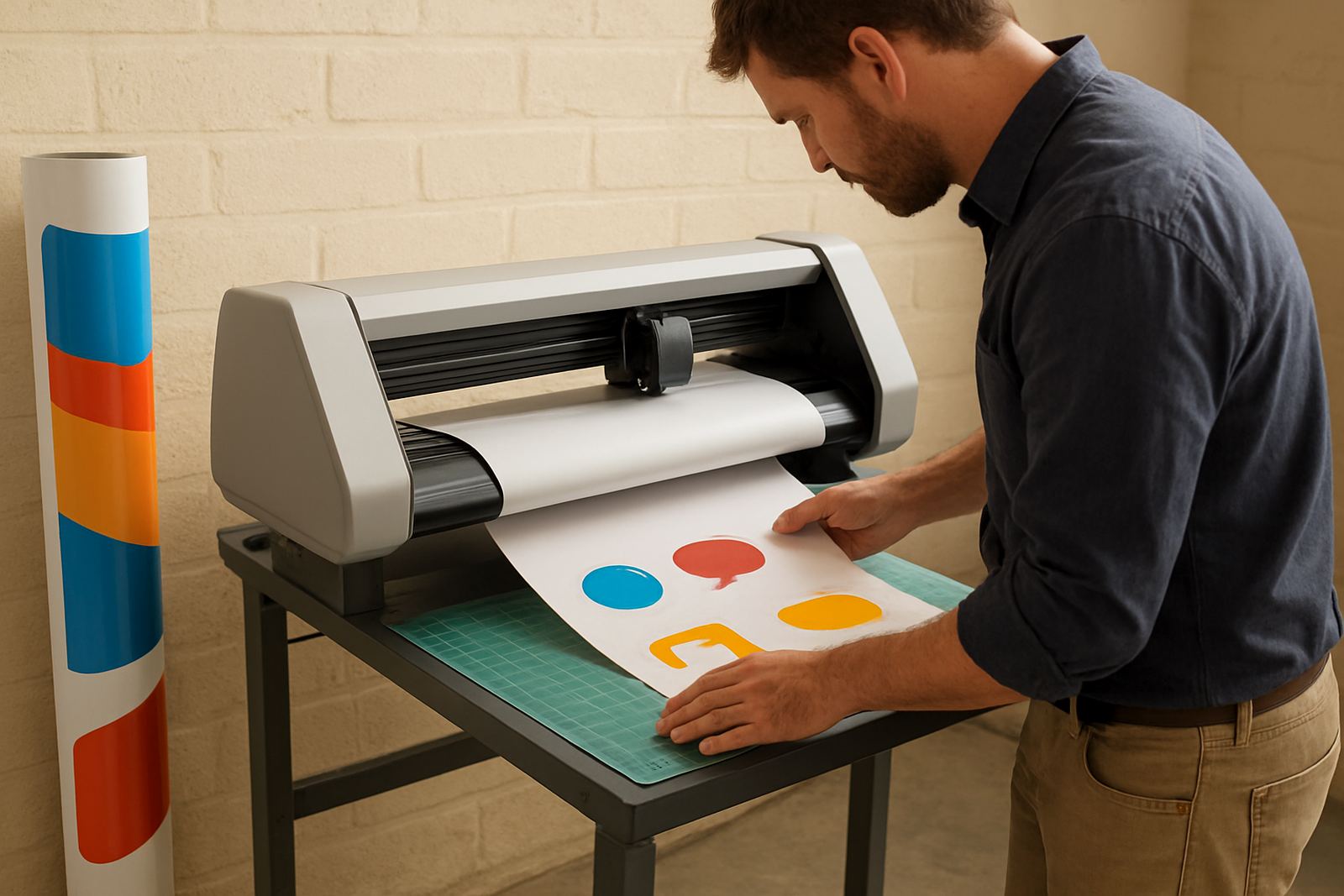
This entry-level contour plotter is made for businesses that cut stickers, decals, label runs and light promotional graphics. It handles print-and-cut jobs where accuracy matters, so your finished pieces come off the sheet neat and ready for application. For a small sign shop in Isando or a studio working from home in Sandton, it gives you a practical way to start producing in-house instead of sending small jobs out.
The machine is best suited to short-run work rather than heavy industrial output. It is a good fit when you need controlled cutting on standard self-adhesive vinyl, reflective vinyl, labels and similar media. If your work includes school labels, bottle stickers, window decals or sample packs for clients, this is the type of cutter that keeps the workflow simple.
Sizes and setup options that suit small workshops
The entry model is available in compact widths that are easier to place in a tight production area. Typical working widths range from 330 mm to 720 mm, which gives enough room for small decal sheets and narrow rolls without pushing your space requirements too far. It can be installed on a bench or on a stand, depending on how you prefer to run production.
- Working widths: 330 mm, 610 mm and 720 mm options
- Roll-fed media for continuous jobs
- Sheet cutting for pre-cut blanks and label stock
- Software-ready output for contour jobs and cut marks
- Fine blade pressure adjustment for different vinyl thicknesses
For teams that are just starting, the smaller footprint helps with packing, cleaning and general movement around the machine. It is easier to place near a printer, laminator or finishing table, which cuts down on handling time.
Where this cutter works best
This cutter suits businesses that do not need a large-format production line yet still want consistent results. It is a strong choice for print shops doing customer stickers, creatives producing branded packs, and signage operators who take on short-run jobs between bigger orders. In humid coastal areas, keeping the cutter in a dry room with good airflow is important, because vinyl and liners can shift if left open too long.
It also works well for teams that need to manage load-shedding carefully. Because the unit has a modest power draw, it can usually be run from a standard protected socket or a small backup supply, as long as the rest of the production line is also planned properly.
- Decals for vehicles, helmets and containers
- Labels for retail, events and packaging
- Window graphics for offices and shopfronts
- Short-run branding for launches and promotions
- Small test jobs before a bigger production run
Installation, power and workspace needs
Installation is straightforward when the cutter is placed on a level surface with enough room for feed and take-up. Allow extra clearance at the front and back for rolls, trimmed sheets and operator movement. A clean bench height helps during blade setting and media loading, especially if your team is learning the machine for the first time.
Most entry units run from standard single-phase power. In practical terms, you should plan for a stable 220 V supply, a grounded socket and protection against surges. An inverter or UPS can help during short outages, but the backup size depends on what else is running in the room. No gas connection is needed. If the site has poor voltage stability, ask for a power check before commissioning, because a cutter that trips often becomes a headache pretty quick.
For nationwide installs, we usually look at the site access, bench position and the route for cables before booking the visit. That helps avoid delays and keeps the handover efficient.
How to keep the cutter accurate and productive
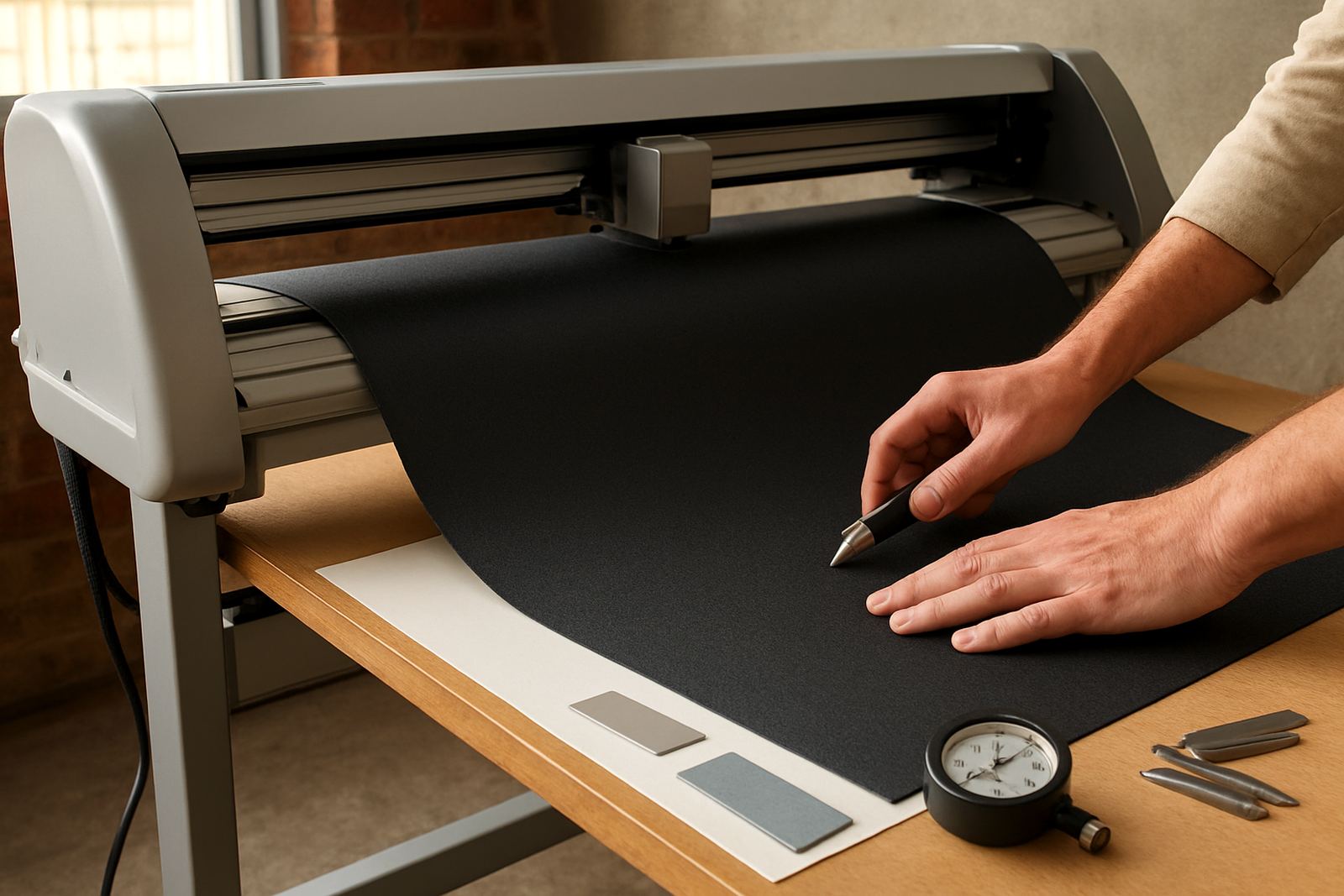
Like any cutting machine, this one needs regular care to stay sharp and consistent. Blade depth, pressure settings and pinch roller condition all affect the final cut. If the blade is set too deep, it will score the liner and wear out faster. If it is too light, corners can lift and small shapes will not weed cleanly.
Basic care is simple enough for most operators, and it pays off quickly. Wipe down dust, keep scrap vinyl away from the feed area and check that the rollers are clean. A short maintenance routine at the start of each week can prevent a lot of small issues later on.
- Check blade pressure before every new media type
- Keep the feed path free of offcuts and dust
- Store vinyl flat or upright in a dry room
- Replace worn blades before quality drops
- Run a test cut when changing stock or thickness
What to check before you place an order
Before ordering, make sure the cutter matches your actual job mix. If you mostly cut tiny labels, accuracy and registration are more important than raw speed. If you are doing longer runs, check the roll capacity and whether the unit accepts the media widths you use most often. It is also worth confirming what software connection you will use and whether your current printer workflow produces reliable cut marks.
Ask for the cut width, maximum media width, accepted blade types and the recommended operating temperature for your room. In Gauteng workshops with dust from daily production, a cleaner environment helps the machine last longer. If you plan to move it between sites or support multiple branches, confirm the unit weight and whether a stand is included.
- Required cut width and media width
- Daily job volume and average run length
- Power availability and backup plan
- Software and registration workflow
- Training needs for the operator or supervisor
We also help teams with operator induction, artwork cut lines, blade pressure setup, registration calibration and troubleshooting session support, so the machine is set up to work from day one.
Key facts
| Product type | Entry-level contour plotter for print-and-cut vinyl work |
|---|---|
| Working width options | 330 mm, 610 mm and 720 mm |
| Media types | Self-adhesive vinyl, label stock, reflective vinyl and similar sheet or roll media |
| Power requirement | Single-phase 220 V, grounded socket recommended |
| Footprint | Compact bench or stand-mounted format |
| Best use | Decals, labels, short-run branding and light signage work |