What the Springs client needed from the start
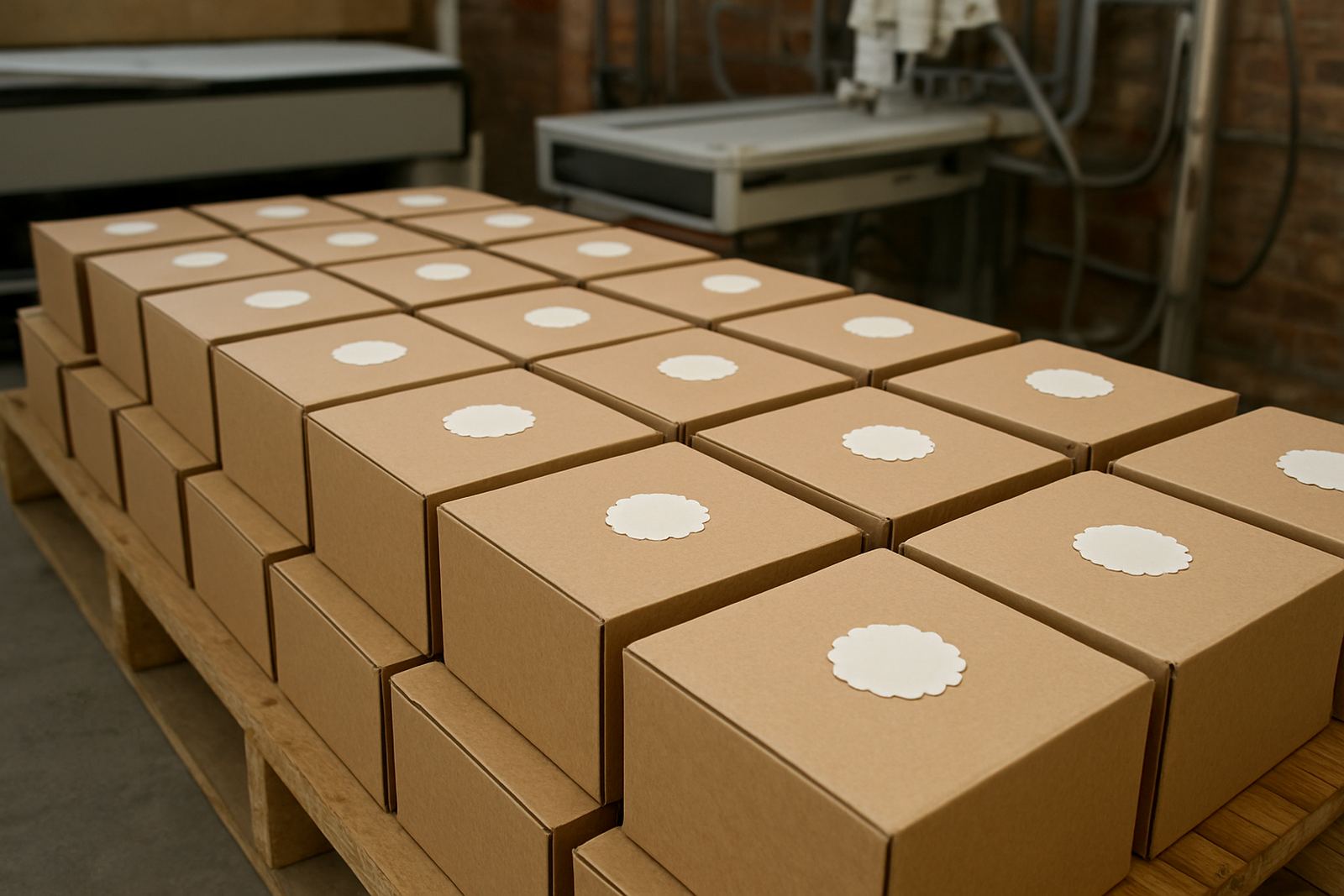
The brief came from a packaging operation in Springs supplying boxed goods for local distribution and contract packing. They wanted branded seals that looked smart on shelf, but also worked as a practical tamper indicator for cartons leaving the packing bench. The client was dealing with mixed box sizes, a few short runs per week and different artwork updates for each product batch.
Because these packs moved through hands quickly, the seal had to sit flat, peel cleanly, and be easy for staff to apply without slowing down the line. The customer also needed repeatability, since the same style would be used across several product ranges with only the name and batch text changing. We kept the spec tight and the format simple, which helped keep the job under control from the first sample through to full production.
- Town: Springs, Gauteng
- Client type: packaging and boxing operation
- Product use: short-run boxed goods, tamper-style sealing and branding
- Priority: clean cut edges, fast application and repeat order consistency
Artwork, cut lines and the small details that matter
The main challenge was not the print itself, it was the cut accuracy around the seal shape and the bite marks around the release tabs. The client’s artwork carried fine lettering, a border line and a small repeat icon, so we first set the cut path around the usable area and then checked how much tolerance the material would allow. A sloppy cut would have left rough corners or lifted edges, and that is the sort of thing packaging teams notice immediately.
We prepared the artwork cut lines, set the registration points and tested the media feed before committing to the main run. Blade pressure was dialled in to suit the adhesive sheet stock so the top layer cut through neatly without scarring the backing. The seals were sized for quick handling, with enough surface area for branding but not so large that they would bunch on small cartons. We also checked the finish under normal packing-room lighting, because a seal can look fine on a screen yet show weak edges in real use.
- Cut format: print-and-cut contour seals
- Seal size: compact carton format with small tab detail
- Artwork detail: border line, repeat icon and short product text
- Setup focus: registration alignment, blade depth and feed control
What we supplied and how the job was run
We supplied the cut files, setup support and the finished sticker seals as a packaged production batch. The job used adhesive media suitable for clean application on carton board and coated pack surfaces. For a short-run packaging line, that meant the pieces could be applied by hand without stretching, curling or needing extra trimming. The client was not looking for oversized labels, just a tidy tamper-style seal that gave confidence at point of issue.
Our production process followed a simple sequence. First we confirmed the final artwork and dimensions. Then we cut a test sheet, reviewed the edge quality and checked that each seal released properly from the backing. Once that passed, we ran the balance of the batch. The work was completed over two weeks, including artwork checks, sample confirmation and the final supply. There was a small delay on one revision round due to a text change from the client, but it was handled before the main run started, so the packing schedule stayed on track.
- Supply included: finished seals, cut line setup and production support
- Material: adhesive sheet stock for carton use
- Turnaround: 2 weeks from brief to final supply
- Issue managed: one wording revision before production lock-off
Why the seals worked on the packing bench
The result was a seal that fitted the workflow rather than getting in the way of it. Staff could lift each piece cleanly from the sheet and apply it in one motion, which mattered because the team was working to a steady pack-out pace. The tamper-style shape gave a visible break point, while the branding made the carton look more finished when it left the site.
The customer also gained better control over short-run changes. Instead of printing generic labels and hoping they would suit every pack, they had a repeatable seal format that could be updated for new product names or batch notes. That made stock planning easier and reduced waste, since only the required quantity was produced for each run. In a period when many sites are managing load-shedding, smaller targeted print-and-cut batches also help because the client can avoid holding too much old stock that may need rework later on.
- Faster hand application at the packing bench
- Cleaner presentation on carton tops and side flaps
- Reduced waste on short runs
- Better control over version changes and batch-specific text
Practical points we would repeat on the next run
If we were doing this job again for the same Springs client, we would keep the same structure: one master layout, one cut system and a tight approval process before production starts. That approach saved time and kept the seal shape consistent across all cartons. We would also keep the artwork fields slightly generous so batch text can be changed without forcing a full redesign each time.
For sites in Gauteng, especially where packaging work is affected by heat, dust or power interruptions, we would again recommend a sample check on the actual box stock before the full order is released. It is a small step, but it helps confirm adhesion and placement on the real surface, not just the proof sheet. We have found this matters more on coated cartons and slightly textured board than people expect, and it saves trouble later on.
- Keep a master artwork format for repeat orders
- Allow space for changing batch text
- Test on the actual carton stock before release
- Hold the same cut spec across reprints for consistency
Support for packaging teams in and around Springs
Contour Cutting works with businesses that need accurate print-and-cut output for packaging seals, decals and related branding pieces, whether they are in Springs or further across Gauteng. Our Isando base supports cutter installs nationwide, and our team can assist with operator induction, media loading, registration calibration and troubleshooting when production needs to keep moving. For a packaging team, that means the machine setup is only part of the service, the rest is making sure operators can use it properly under real conditions.
Where needed, we also handle maintenance basics, supervisor coaching and remote refresher sessions for teams that want to keep their workflow steady after installation. For Springs jobs, the useful part is usually speed combined with precision, because packaging orders change quickly and the finish still has to look right on every box. If the brief is simple, we keep it simple. If the artwork is tight, we slow down and check it properly.
- Area support: Isando Base, Sandton Support, Midrand Support, Germiston Support, Boksburg Support, Randburg Support
- Typical help: operator induction, blade pressure setup, registration calibration
- Best fit: packaging, decals, signage and short-run branded cut work
Key facts
| Project type | Tamper-style branded seals and packaging decals |
|---|---|
| Town | Springs, Gauteng |
| Client type | Short-run packaging and boxed product operation |
| Turnaround | 2 weeks |
| Finish | Print-and-cut contour shape with clean release |
| Use case | Carton sealing, branding and batch-specific pack identification |