What the client needed in Soweto
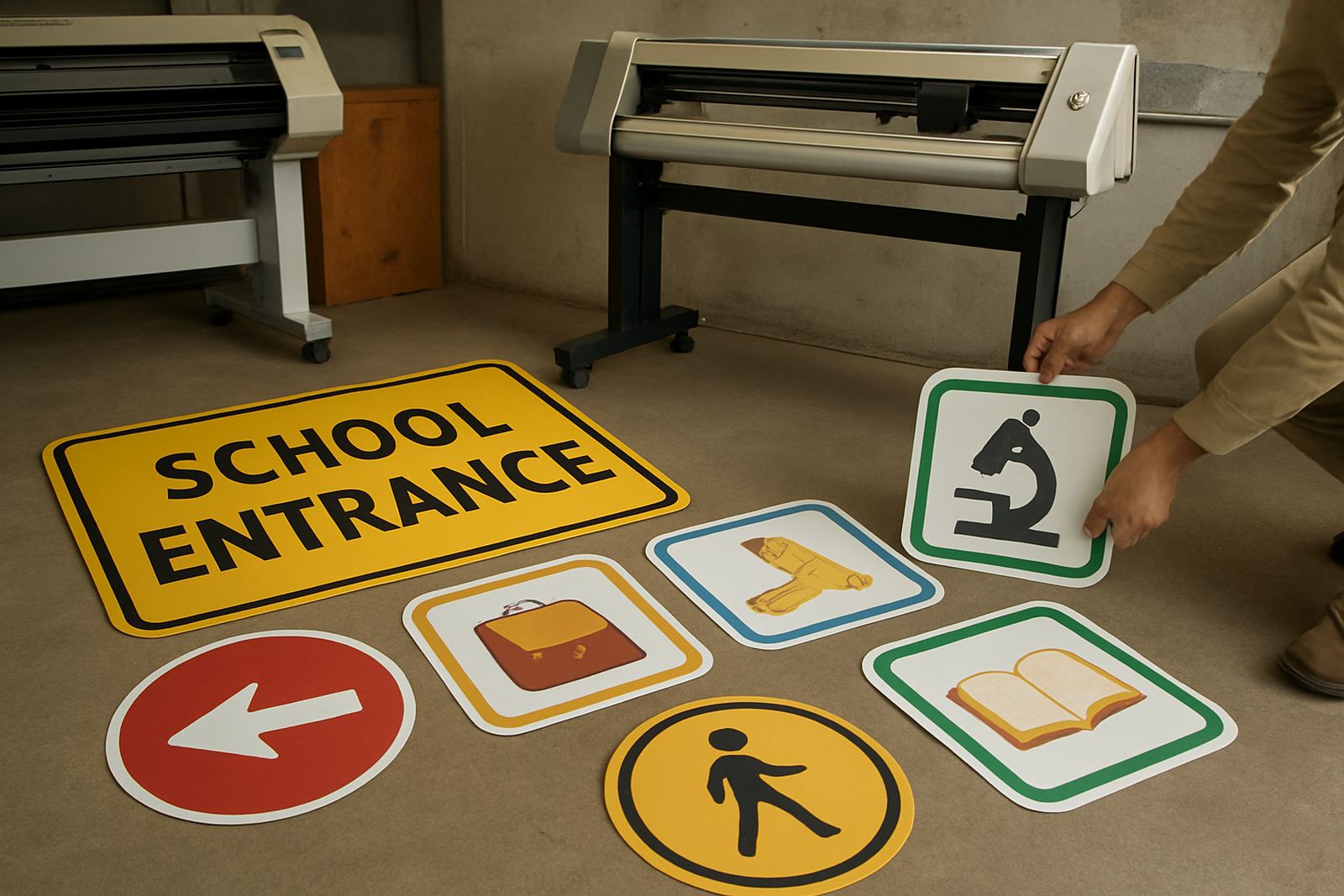
The client was a local facilities team working on a public-facing site in Soweto where visitors often arrived by taxi, minibus or private car and needed quick direction from the entrance to reception, meeting rooms and service counters. They wanted a single graphic package that would do two jobs at once, guide people and reinforce the brand without crowding the space.
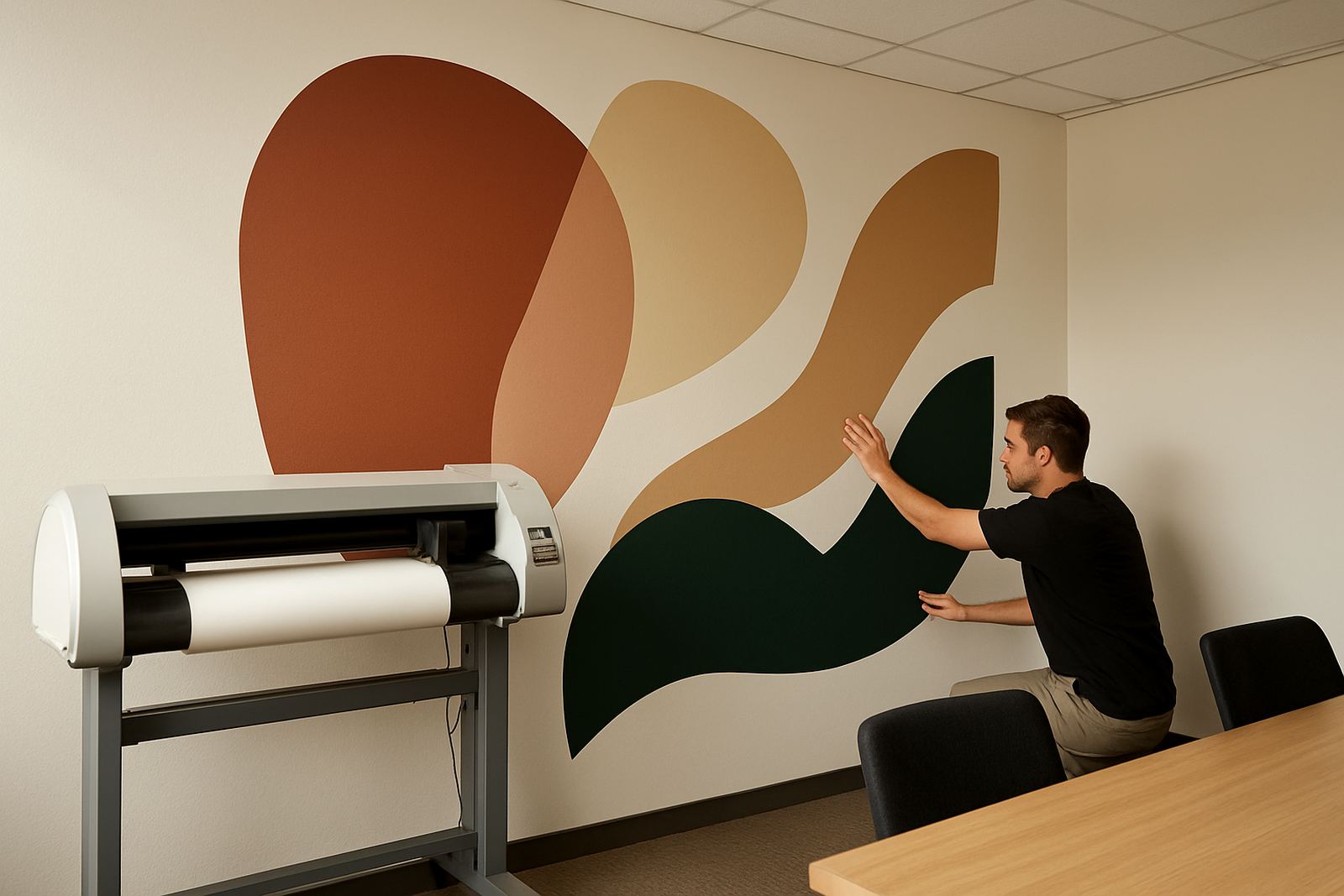
The main brief was simple on paper but tighter in practice. The floor markings had to be readable at walking pace, stay visible under indoor lighting and hold up to regular mopping. The wall pieces had to work on painted plaster and smooth laminate surfaces, with enough contrast to stand out in a hall that gets busy at peak times. We also had to account for load-shedding because the building uses backup lighting in some areas, so the artwork could not rely on glossy glare to carry the message.
We planned the set around short route points, bold arrows and a modest colour system that matched the existing brand panels. The client did not want a cluttered lobby, just clear instruction and a neat finish that felt intentional rather than patched together.
Artwork, cut lines and material choices
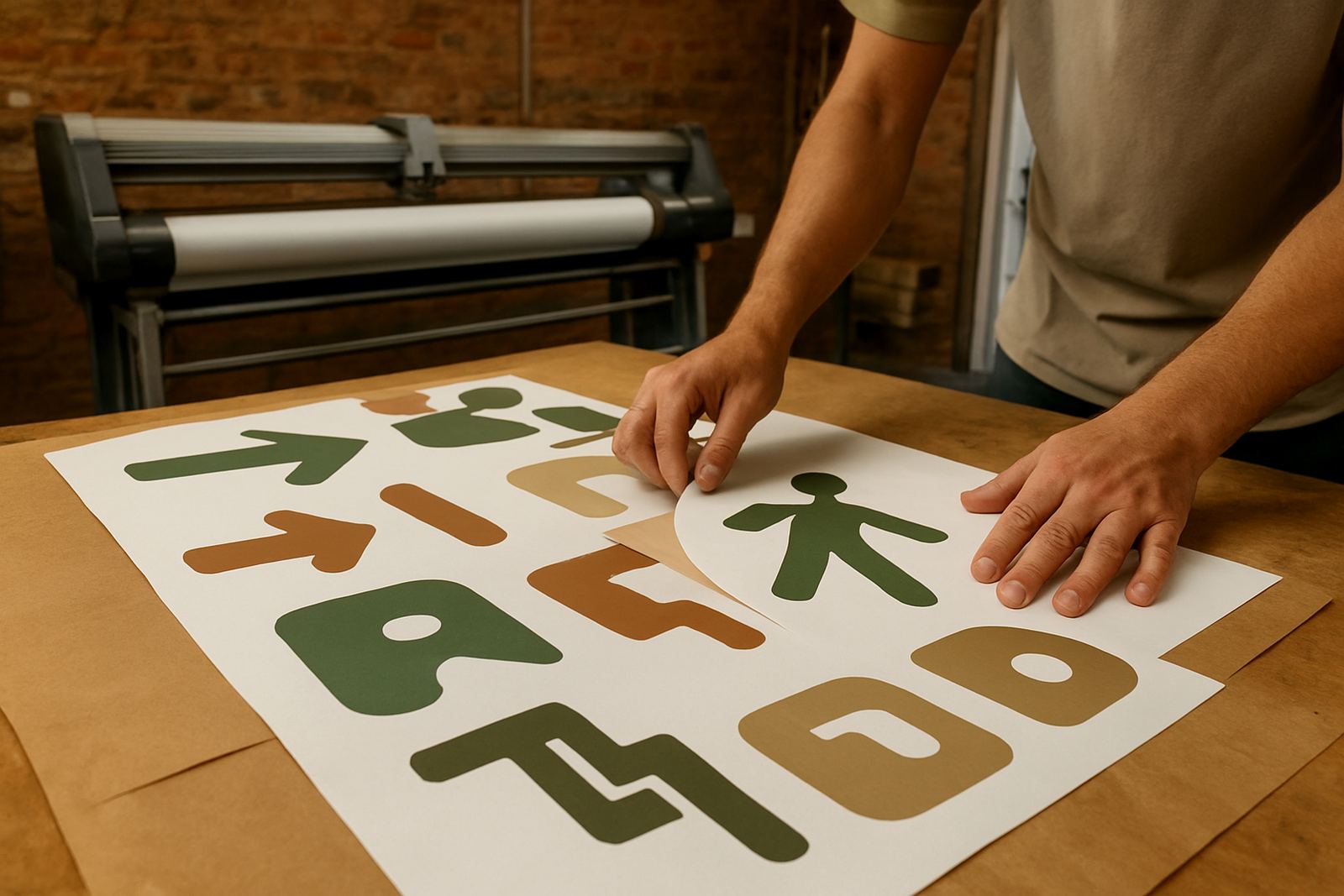
Before cutting any media, we set up the artwork with proper cut lines and registration marks so the print-and-cut process would track cleanly across the full run. This mattered because the set included both circular floor markers and longer directional wall pieces, and each item had to keep the same edge quality. Our production team checked every file for font size, line weight and minimum legibility distances before release to the cutter.
For the floor sections we supplied a laminated self-adhesive vinyl suited to hard indoor surfaces, with a textured protective layer for slip resistance. On the wall side we used a durable print media chosen for smooth application and tidy removal if the route ever changes. The client needed a practical solution, not a permanent rebuild, so we kept the system flexible.
- Floor arrows and route markers sized from 150 mm to 600 mm wide
- Wall direction panels sized to fit 900 mm and 1200 mm viewing zones
- High-contrast print with matte finish to reduce glare under mixed lighting
- Cut registration checked on each batch for repeatable alignment
The installation surfaces were measured on site and the final cut files were adjusted to suit the actual wall lengths and floor clearances. That extra step saved time during fitting and reduced offcut waste, which the client appreciated because the job had a fixed budget.
Production and installation in three weeks
Week one was taken up by site photos, measurements and artwork setup. We also confirmed the route sequence with the client so the graphics would mirror the way visitors actually moved through the building. Week two covered print production, cutter setup and a full quality check on the directional elements. By week three, our installation team was on site in Soweto fitting the floor and wall graphics in staged sections so public access could continue with minimal disruption.
The install itself was handled by a small crew so the client had direct contact and quick decisions on the day. Johan van Wyk led the fitment work, with support from the production side to make sure the printed pieces went in as planned. We cleaned, marked and aligned each section before application, then checked edge lift and bond after setting. A minor alignment correction was needed on one wall panel because of a hidden door frame, but that was sorted on the spot.
Because the site had movement throughout the day, we scheduled the floor work early and allowed curing time before opening the route to visitors. That reduced the risk of scuffing in the first 24 hours. The client also asked us to leave a simple cleaning note for the maintenance team, which we did, including safe mop guidance and what chemicals to avoid.
Why the finished route worked better
Once the graphics were in place, the site’s visitor flow improved straight away. People could see where to go from the entrance without asking staff for directions, and the wall pieces gave the route a proper sense of order. The branding also became more consistent across the building because the same colour language was repeated from floor to wall, which helped the space feel planned rather than temporary.
The client reported fewer interruptions at reception and less congestion near the main doorway. Staff could point visitors to a path instead of giving long verbal instructions, and that saved time during busy periods. The floor arrows held their position well under daily foot traffic, and the matte finish meant they stayed readable even near glass and brighter spots.
- Clearer visitor movement from entrance to service points
- Less pressure on reception staff during peak arrival times
- Consistent branding across floor and wall surfaces
- Better visibility for first-time visitors and delivery drivers
What mattered most was that the package did not overstate itself. It simply did its job well, and in a public building that is usually what counts.
What we would repeat on the next Soweto set
If we did this type of project again, we would keep the same approach: short route mapping, accurate cut lines and a staged install plan that lets the building keep running. We would also insist on early checks for wall texture and floor cleaning products because those details affect adhesion more than many people expect. In one corridor the surface had been freshly painted only a few days before, and we held back that section until we were satisfied the cure time was enough.
For a similar site, we would also recommend a short induction for the maintenance team so the graphics are cleaned and inspected correctly. That sort of handover is small but important, especially in buildings where staff changes happen often. Our operations team, led by Lerato Mokoena, usually includes that support in the close-out because it avoids avoidable call-backs.
From a production point of view, the set confirmed what we already know: if the artwork is prepared properly, the cutter can hold fine detail without fuss and the final result stays neat. For signage work in Johannesburg, Soweto or anywhere else in Gauteng, that saves time and keeps the finish looking professional for longer.
Support after installation
After completion, we stayed available for a remote refresher with the client’s site team so they could understand the route order, cleaning routine and how to spot early wear. This is part of how we work on practical jobs: not just fit and leave, but make sure the people on site know what they have and how to keep it looking right.
Our technical support lead, Thabo Molefe, also reviewed the file set in case the client wanted extra arrows later or a revised wall panel if the route changes. That is useful for buildings that host regular visitors or events, because directions often need adjustment after the first few weeks.
- Remote refresher available for site staff
- Replacement graphics can be matched to the original file set
- Support available from Isando, Sandton, Midrand, Germiston, Boksburg and Randburg
The result was a tidy, practical visitor set that matched the building’s daily use, held up under routine cleaning and gave the client room to expand the route later if needed.
Key facts
| Project type | Combined floor and wall wayfinding package |
|---|---|
| Location | Soweto, Gauteng |
| Timeline | 3 weeks from briefing to installation |
| Floor material | Laminated self-adhesive print media with slip-resistant finish |
| Wall material | Durable printed adhesive graphic media for smooth interior surfaces |
| Key use | Visitor direction, branding and route clarity in a busy public-facing building |