Fourways brief: clean garment graphics with repeatable size control
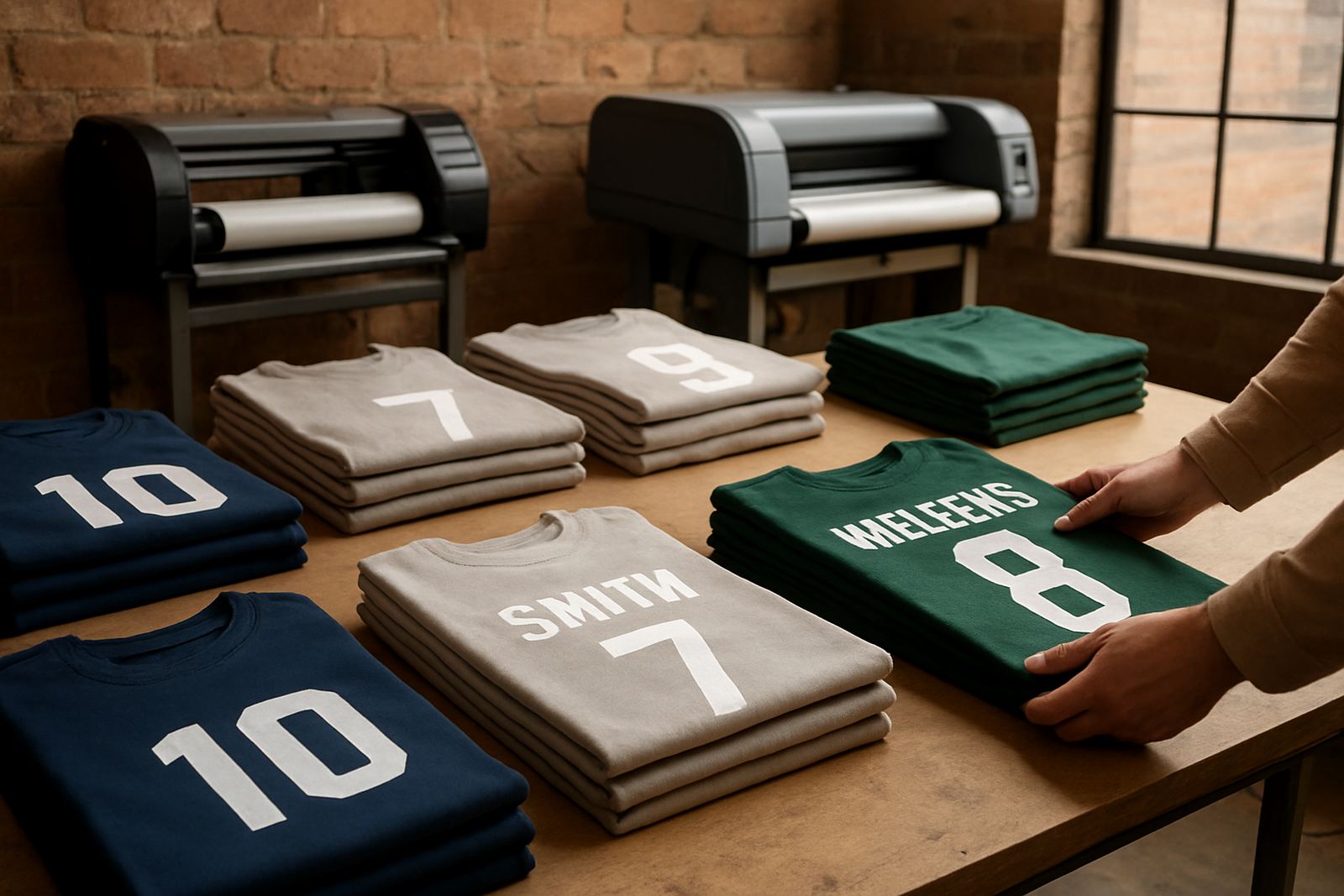
The client was a local apparel and promotions business in Fourways handling teamwear, event wear and short-run branded garments for corporate and school orders. They needed cut graphics that could be applied quickly, with enough detail for logos, names, sleeve marks and chest placements without slowing down the press room. The work had to suit both cotton-rich garments and poly blends, because their order book changed week to week.
The main brief was simple enough on paper, but it came with proper production pressure. They wanted accuracy across multiple garment sizes, fast changeovers and a cut solution that would not need constant rework after load-shedding interruptions or delayed print batches. Artwork arrived in different file states from a few designers, so the first job was to standardise the cut paths and make sure the shapes would weed cleanly. That meant checking line joins, closed paths and minimum detail before anything went into production.
- Project type: heat-transfer cut graphics for teamwear and promo garments
- Client area: Fourways, Johannesburg
- Artwork types: logos, numbers, names and small placement marks
- End use: press-applied garment decoration for short and medium runs
Production constraints and the practical fixes
Garment work has its own set of constraints and this one was no different. The client needed a finish that stayed clean after washing, looked sharp on dark fabric and did not distort on stretch sections like shoulder panels and side seams. They also needed a production method that fit their available floor space. In a Fourways workshop that runs near the Sandton side of town, space is often tighter than people expect and every metre matters.
We set the job up around manageable batch sizes, so the team could work through sizes and colours without mixing artwork. Blade pressure had to be tuned for the chosen media, because too much pressure leaves ragged edges and too little means slow cutting and waste. Registration was also checked carefully so that repeated jobs would line up properly, especially where one design had multiple colours or layered elements.
- Key constraints: mixed artwork quality, limited rework time, garment stretch, small workshop footprint
- Setup focus: blade pressure, registration calibration, media loading and cut path cleanup
- Environmental factor: load-shedding planning for stop-start production days
What we supplied and how the run was handled
We supplied the cut graphics as pre-checked production files and handled the cut setup so the client could move straight into weeding and pressing. The run included standard teamwear marks and promotional garment graphics in sizes suited to chest, back and sleeve positions. Where artwork had fine internal spaces, we adjusted the cut strategy to keep letters open and corners crisp, which reduced lifting at the press stage.
The job moved through three production stages over two weeks. Week one was artwork prep and test cutting. Week two covered the main cut run, quality checks and support on any shapes that needed a second look. Because the client was working with garments in different fabric weights, we also flagged which elements would press best on lighter tees and which ones needed a firmer press window on poly blends. That kind of note saves time when a team is under pressure before a launch or event.
- Timeline: 2 weeks from file check to final supply
- Supplied output: weed-ready heat-transfer cut graphics
- Support included: artwork cut lines, media loading guidance and maintenance basics
- Production notes: press order, garment compatibility and handling for repeated runs
Results on garment runs and day-to-day turnaround
The end result was a cleaner production flow with less waste from miscuts and fewer delays when jobs changed size or colour. The client could run through orders faster because the cut lines were consistent and the graphics came ready for pressing. That matters in apparel work, where one late delivery can throw off a whole week’s schedule. The Fourways team also reported better consistency across repeat orders, which helped when the same logo had to be supplied for staffwear and event stock at different times.
From our side, the real win was practical. Once the setup was settled, the client did not need to keep revisiting the same errors. If a shape needed a tweak, it was identified early and corrected before a larger run started. The production room stayed easier to manage and the staff had a clearer process for when to cut, weed and press. It is not glamorous work, but it is the sort of job that pays back every day in time saved.
What we would do again for a similar Fourways order
For a similar apparel job, we would follow the same approach: clean the artwork first, set the blade and registration properly, then test on the actual media before the full run. That gives the client a reliable starting point and keeps the press team from fighting with tiny issues later on. We would also keep the run split into practical batches so any size or fabric changes can be handled without interrupting the full order.
If the client had another round of teamwear or promo garments, we would again recommend a short induction for whoever is doing the cutting day to day. A few hours on artwork cut lines, media loading and troubleshooting usually saves far more time than it costs. For garment work in Johannesburg, especially where schedules shift around weather, traffic and power cuts, that sort of basic control makes a real difference. It is better to get the setup right once, then keep it steady.
- Best repeat steps: artwork cleaning, test cut, pressure setting, size grouping
- Useful training: operator induction and troubleshooting session
- Good fit for: teamwear, promotional garments and short-run branded orders
Key facts
| Client type | Apparel and promotions business |
|---|---|
| Location | Fourways, Johannesburg |
| Service delivered | Heat-transfer cut graphics |
| Timeline | 2 weeks |
| Use case | Teamwear and promotional garments |
| Support included | Artwork cut lines, media loading, blade pressure setup and troubleshooting |